The World in Our Minds 2025: Ultra-Diversity – Event Report
1/28/26
On November 2 and 3, 2025, “The World in Our Minds 2025: Ultra-Diversity” was held at Tokyo Port City Takeshiba.
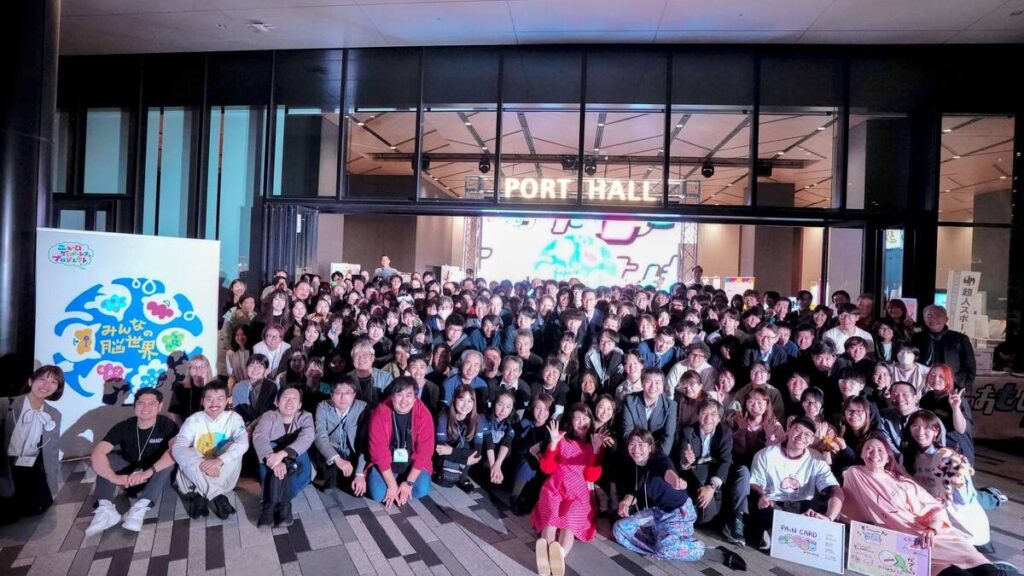
Expanding on last year’s 55 exhibits, this year’s event scaled up significantly, bringing together 77 interactive booths from across Japan’s industrial, governmental, and academic sectors. Held concurrently with “Chomoro” (A Slightly Future), the exhibition was a resounding success, welcoming approximately 30,000 visitors over the two-day period.
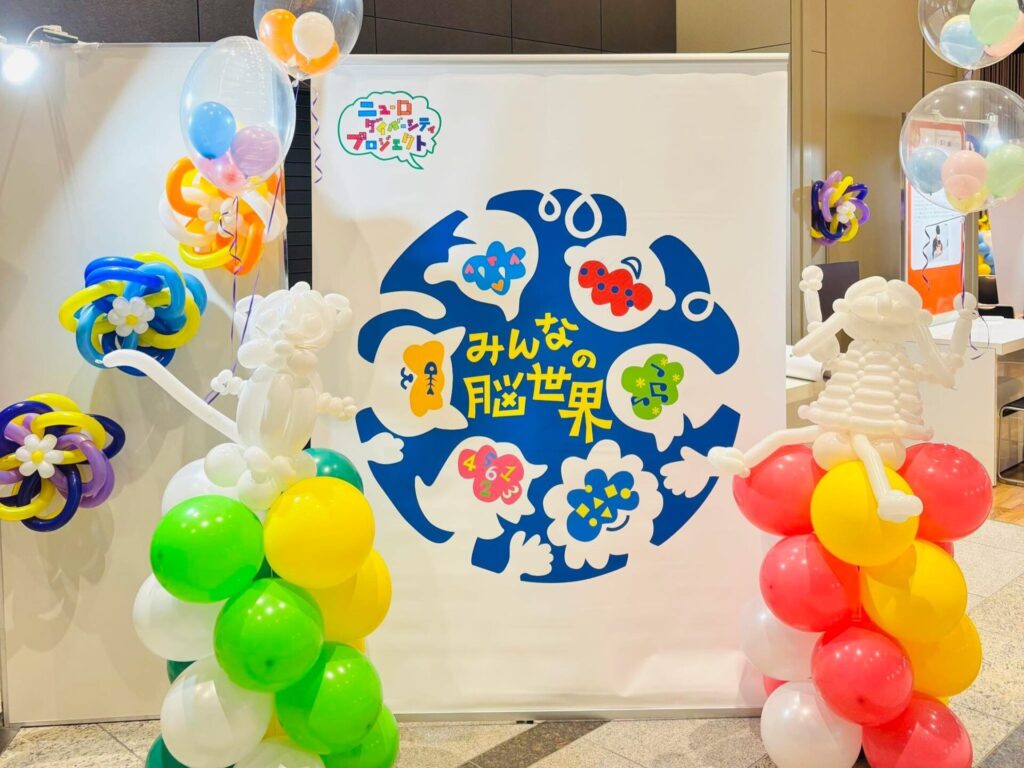
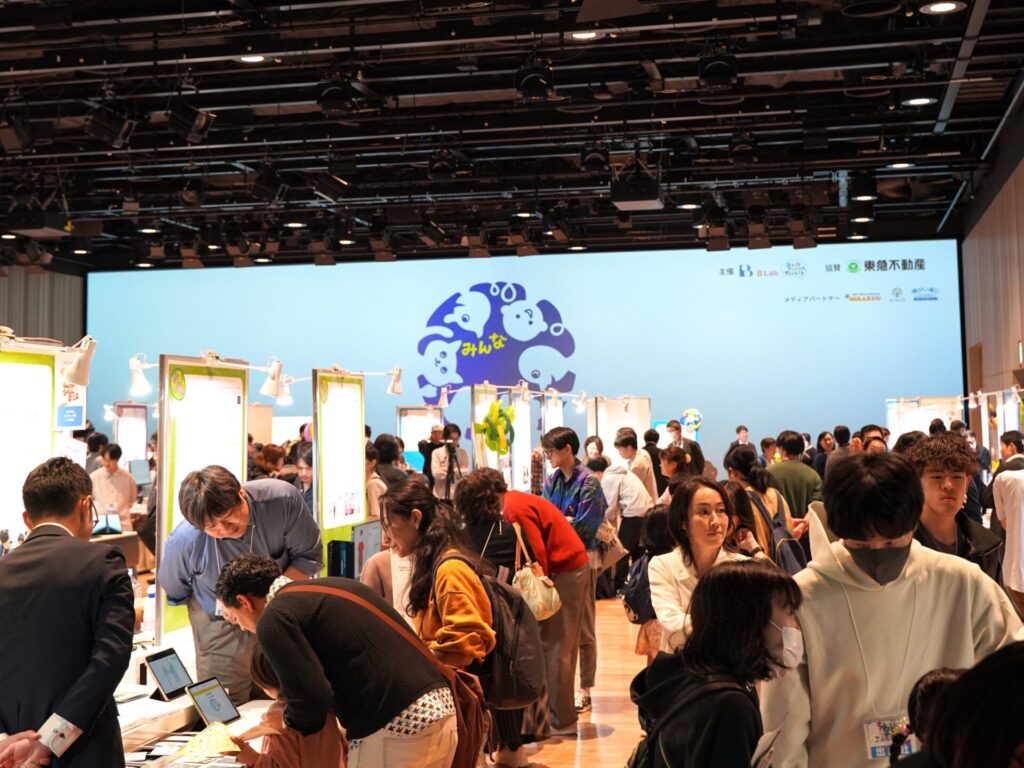
77 exhibits from Japan’s leading universities, research institutes, and corporations come together.
At “The World in Our Minds 2025: Ultra-Diversity,” a diverse group of collaborators from industry, government, and academia joined forces to present a record-breaking 77 interactive exhibition booths. The event drew a wide audience, from children to adults, all of whom had the opportunity to engage firsthand with the various exhibits.
In this exhibition, the unique world that each of us inhabits is referred to as “The World in Our Minds” (Brain World). Based on the concept that this world is shaped by the interaction between the “individual” and their “environment,” the venue was organized into five distinct areas, following last year’s successful format. By exploring these areas, visitors were able to naturally deepen their understanding of neurodiversity.
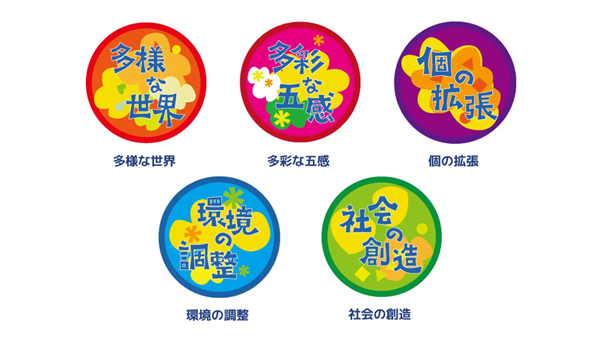
A Diverse World
The journey begins in the “Diverse World” area at the entrance. Here, we unravel the mechanisms of human perception, exploring the idea that “even when looking at the same thing, everyone sees and feels it differently.”
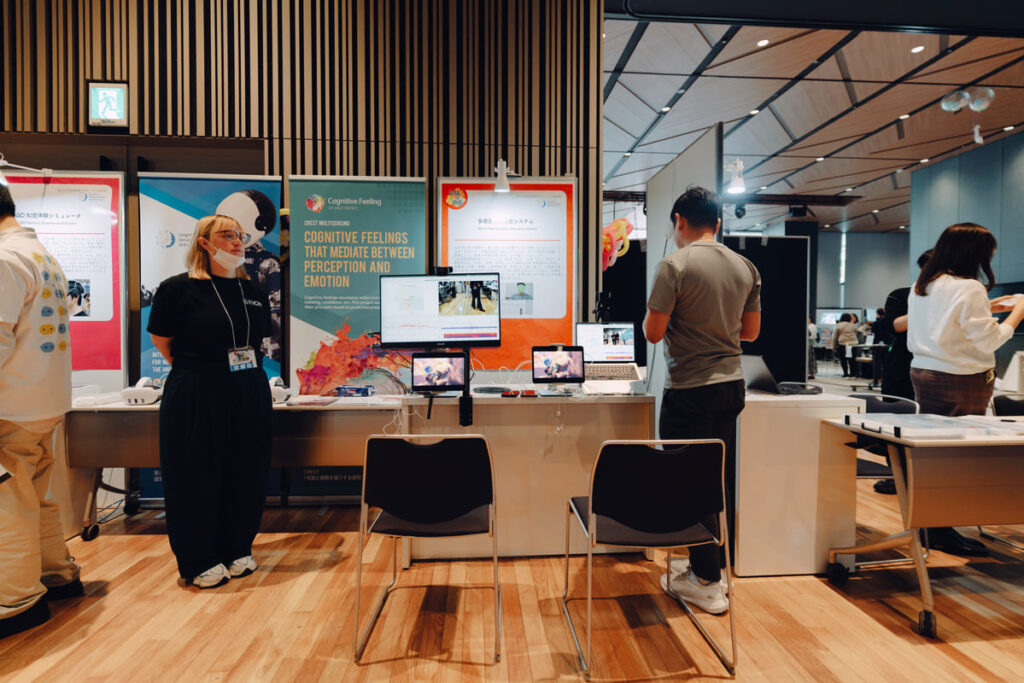
Each individual’s brain is unique, and these neurological differences shape our distinct perspectives. This area featured 17 exhibits designed to bring these different viewpoints to life. Highlights included sensory puzzles that change depending on your perspective, tactile illusions, and VR simulations that place you in unfamiliar situations. Other exhibits challenged our “common sense” regarding communication and judgment, or allowed visitors to experience dyslexia firsthand by seeing letters through a different lens. Through these immersive experiences, visitors could step outside their usual selves and touch upon the vast diversity of the world.
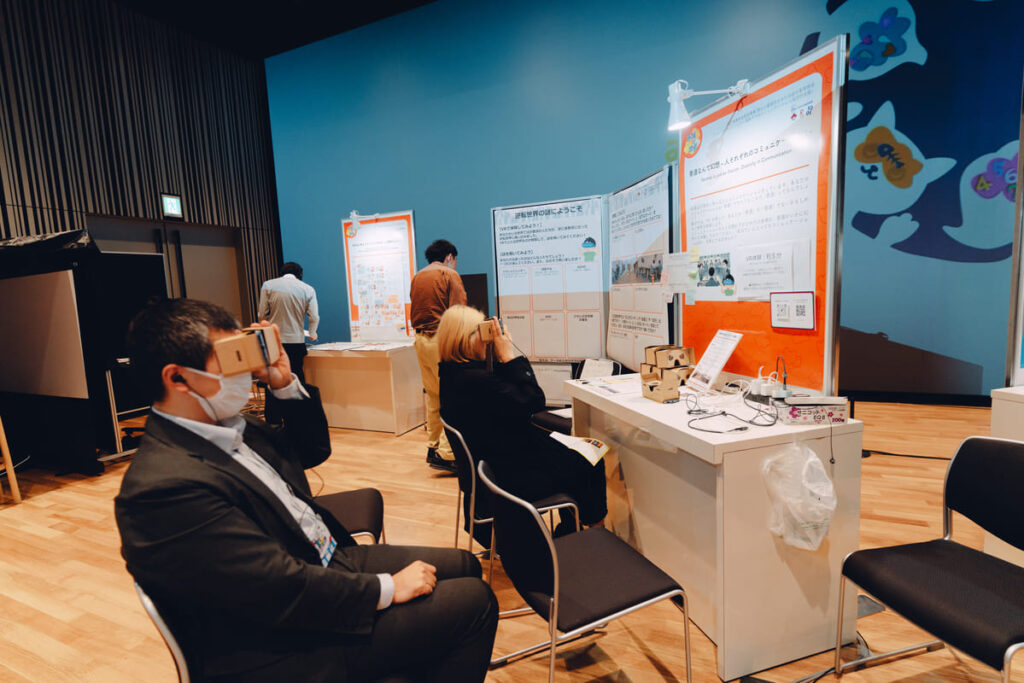
- Biodiversity (B Lab)
- Multimodal Emotion Estimation System (Cognitive Developmental Robotics Lab, The University of Tokyo)
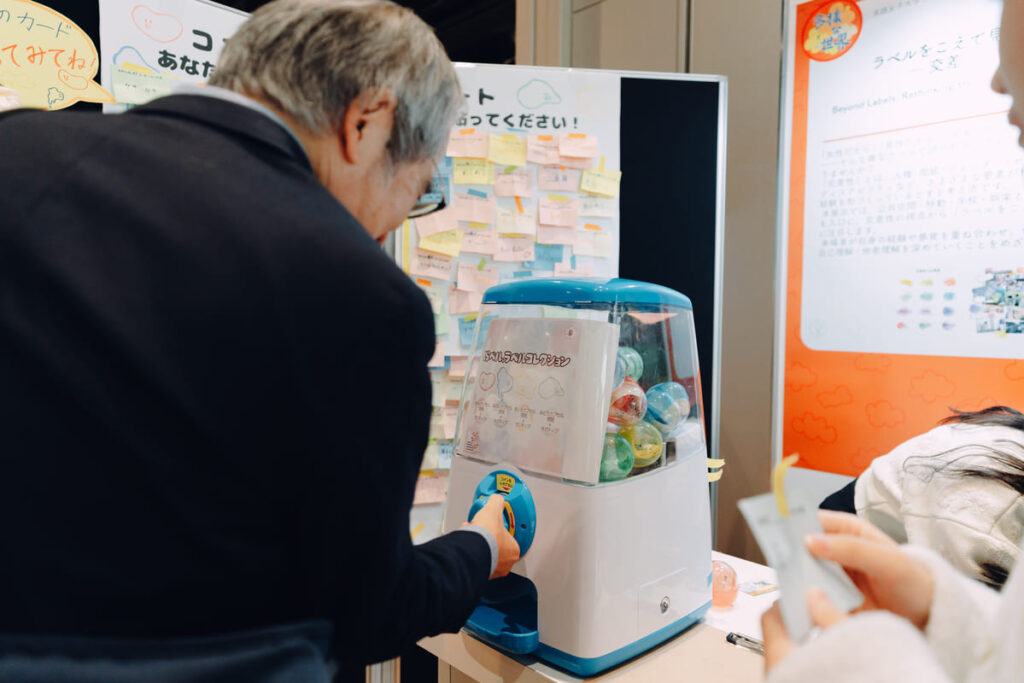
- Beyond Labels: Rethinking the Everyday through Intersectionality (Social and Gendered Innovations Institute & Shineha Lab., Jissen Women’s University)
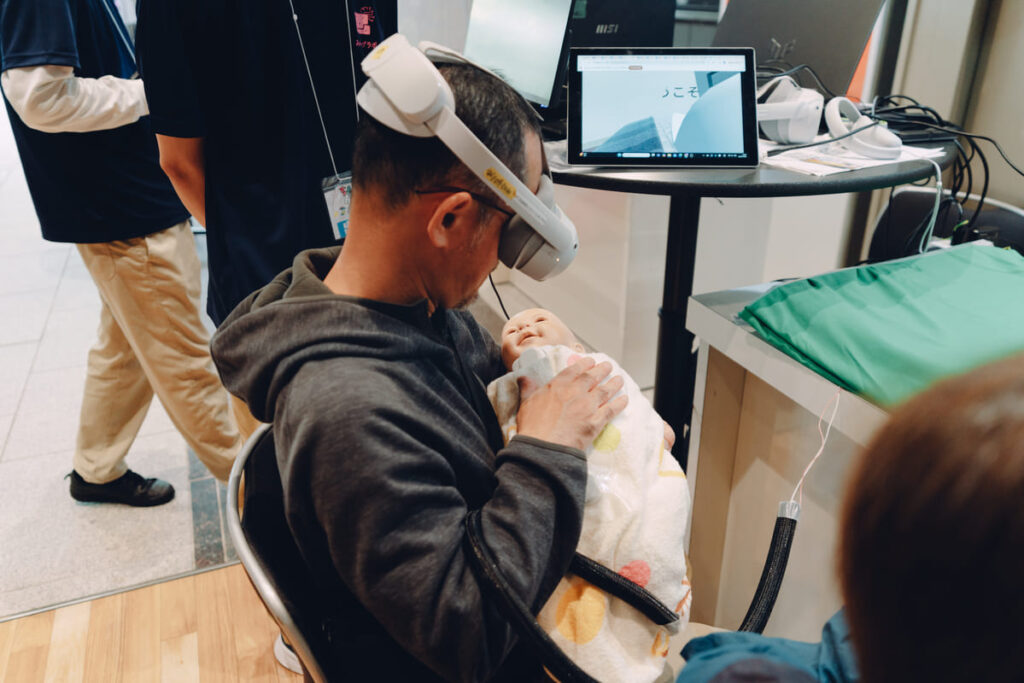
- Try Putting a Baby to Sleep in VR! (Mirai Living Lab, Nakatani Laboratory, Institute of Science Tokyo)
- Confident or Cautious? Discover Your Decision-Making Style! (NTT Human Informatics Laboratories)
- Which will you choose? Discover your choosing habits. (Research Center for Child Mental Development, Hamamatsu University School of Medicine & SAAB Lab, Hitotsubashi University)
- A Cartography of Queer Voices: An Interactive Projection of LGBTQ+ Community Challenges and Experiences Organization (Kundu Anish, Keio University Graduate School of Media Design, Embodied Media Project, PhD Student)
- Diversity Warming-Up Tool [β-version] Noticing the world beyond what you see now (Concent, Inc.)
- Customize the world of letters! Dyslexia Experience (Social Model Design Project for Dyslexia)
- VR Portable Silent Room (Skiers Kinga Keio University Graduate School of Media Design, Embodied Media Project)
- Normal is just an illusion: Diversity in Communication (JST-Mirai Program Society Optimized for Diversity mission area “Bidirectional communication support in neurodiverse environments”)
- Let’s Learn About Dementia — With a Sugoroku Created by High School Students! (Kanagawa Prefectural Yokosuka High School, NTT Human Informatics Labs.)
- Building a Dementia-Free Society Through “Brain-Sustaining Conversations” (RIKEN, National Research and Development Agency)
- Creative VR: A Therapist-Guided Art Platform for Emotional and Social Communication (Skiers Kinga, Keio University Graduate School of Media Design, Embodied Media Project)
- Do they really feel so different? Experience the wonder of tactile illusions!(B Lab in collaboration with Yoshihiro Tanaka (Professor, Nagoya Institute of Technology / InaRIS Fellow))
- Why do they look so different? Let’s experience the wonder of optical illusion! (B Lab)
- The World in Our Minds: Photo Spot (B Lab)
A Variety of Senses
The next stop is the “Vibrant Senses” area.
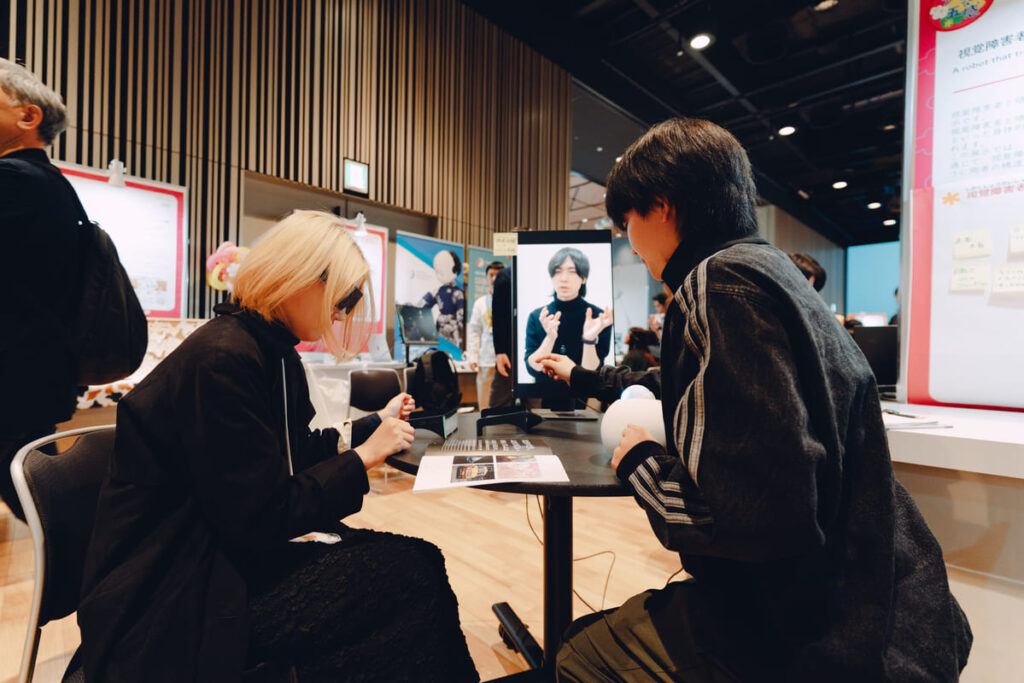
Sight, hearing, touch, taste, and smell—while we all perceive the world through these five senses every day, the way we experience them is deeply personal. This area provided visitors with opportunities to simulate others’ sensory perceptions and reflect on their own, fostering a deeper connection and mutual respect through the recognition of sensory diversity.
The zone featured 18 exhibits that blended learning with wonder. Highlights included an ASD sensory characteristic simulator, a “tactile force test” to measure touch sensitivity, and unique installations combining taste, smell, and texture. Technology-driven experiences also took center stage, such as a robot that translates physical movements between visually impaired and sighted individuals, and VR exhibits that allow users to step into another person’s sensory world. Through these interactive displays, visitors gained a firsthand understanding of the vast spectrum of human sensation.
- A Diverse World Through the Ways We Perceive Sound (B Lab in collaboration with kabin Lab.)
- Sharpen Your Senses! The Great Autumn Pitch-Dark Sports Festival (Dialogue Diversity Museum “Taiwa no Mori”)
- 3D Content with a Sense of Haptics and Scent (NHK Science & Technology Research Laboratories)
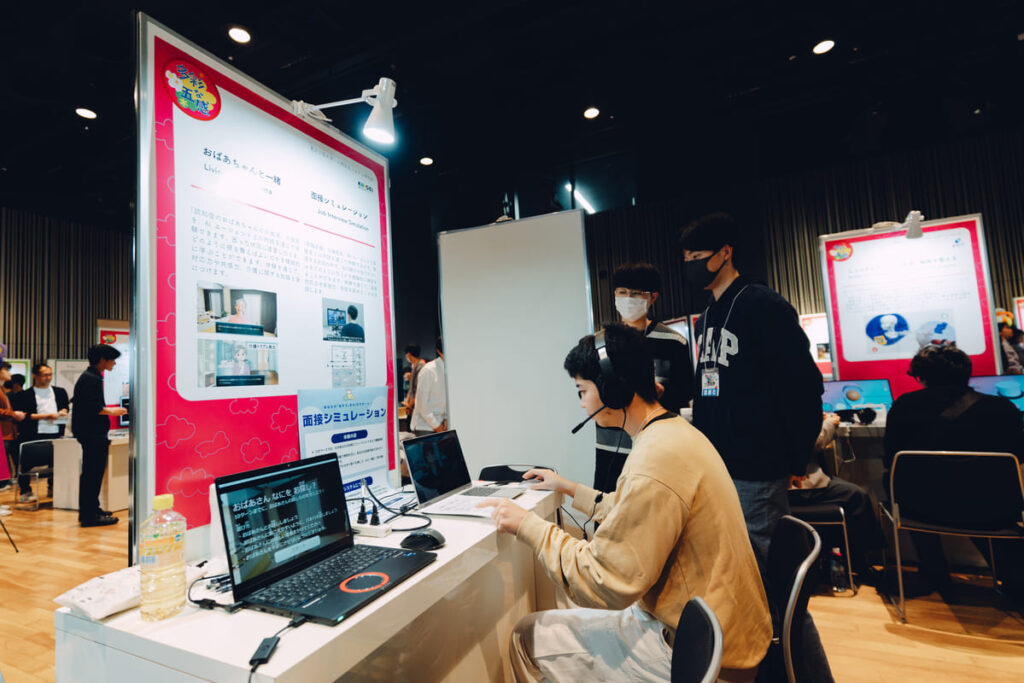
- Living with Grandma (Human Simbiosis Systems Laboratory, Tokyo Polytechnic University)
- Transmission system of “warmth” (Sato Lab., Nara Women’s University)
- Does the Form look Sweet or Bitter? -Flavor Visualization- (Multisensory Cognitive Design Laboratory Ritsumeikan University)
- Virtual experience of menstrual cramps (Sato Lab., Nara Women’s University)
- Touch Test (B Lab / Haptics Lab, Nagoya Institute of Technology / Inamori Research Institute for Science (InaRIS) / Embodied Media Project, Keio University Graduate School of Media Design)
- Job Interview Simulation (Human Simbiosis Systems Laboratory, Tokyo Polytechnic University)
- Shokkan Tech ~ Altering Food Texture and Tactile Sensation (Quality of Life Technology (Ino & Yoshimoto Lab.), The University of Osaka)
- VR System for Experiencing Others Through Spatial Information Manipulation: Unilateral Spatial Neglect and Memory Impairment in Dementia (Imura Laboratory, Kwansei Gakuin University)
- Drone that follows invisible odors (Terutsuki Laboratory, Shinshu University / Bio-driven Emergent Robotics Initiative, Shinshu University)
- A robot that translates the bodily actions of sighted and blind people (Cyber Interface Lab., The University of Tokyo)
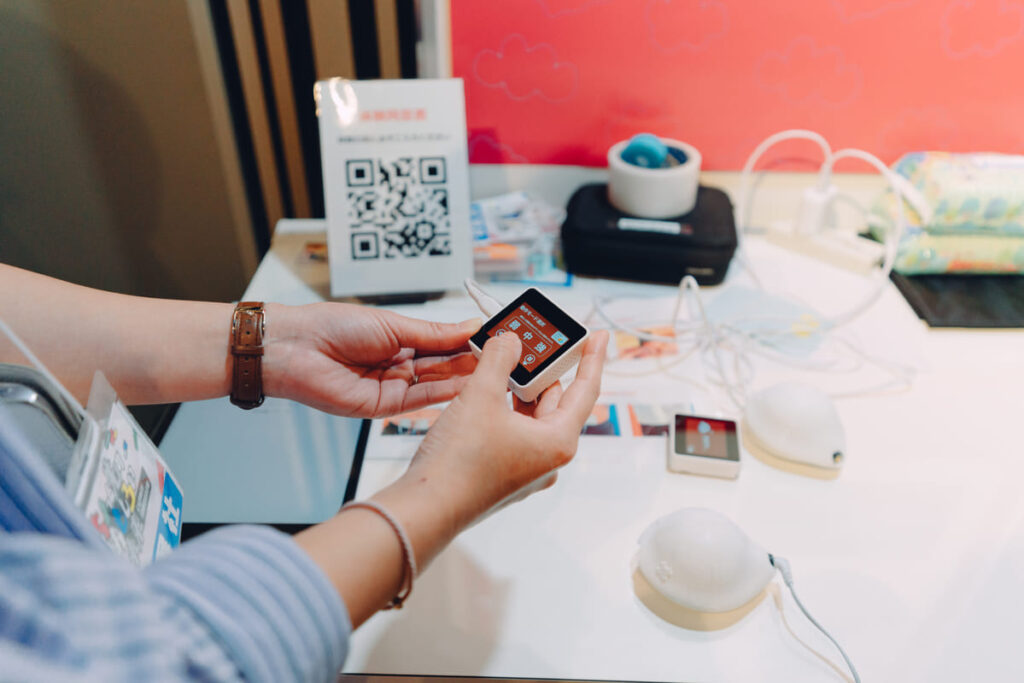
- Hug a plushie that moves with your heartbeat and discover your hidden stress through rhythm. (WiTH PAiN)
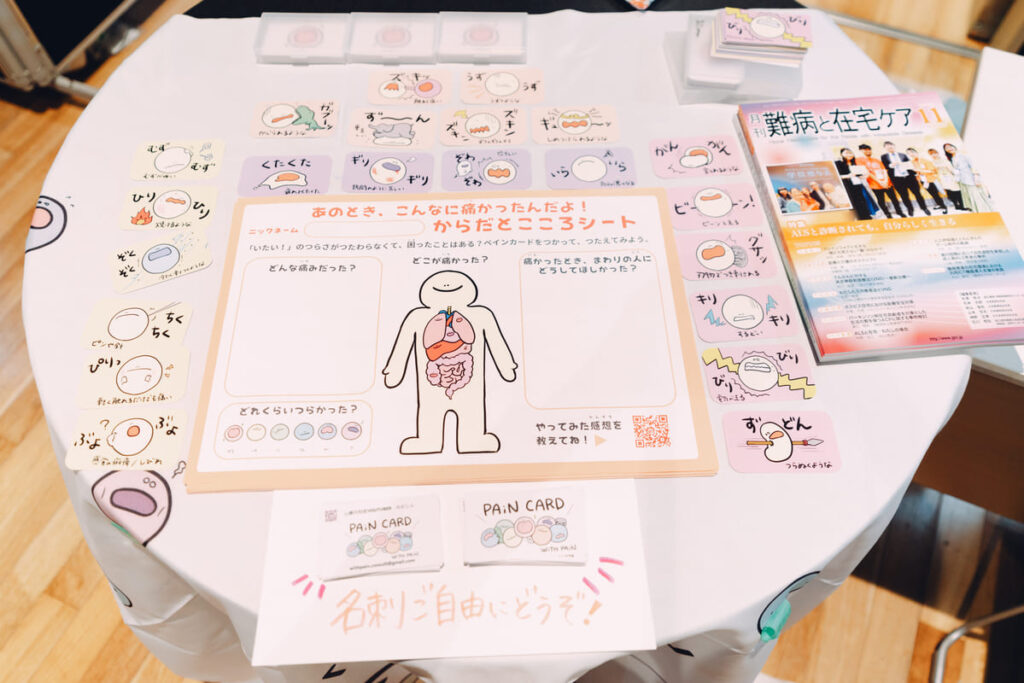
- Making Invisible Pain Visible: Pain Card Workshop (WiTH PAiN)
- ASD Sensory Experience Simulator (Cognitive Developmental Robotics Lab, The University of Tokyo)
- We all feel touch in our own way (Nagoya Institute of Technology)
- Deceiving the Brain: A VR Experience of Scent and Motion (Ritumeikan University & Meijyo University)
Expanding People Power
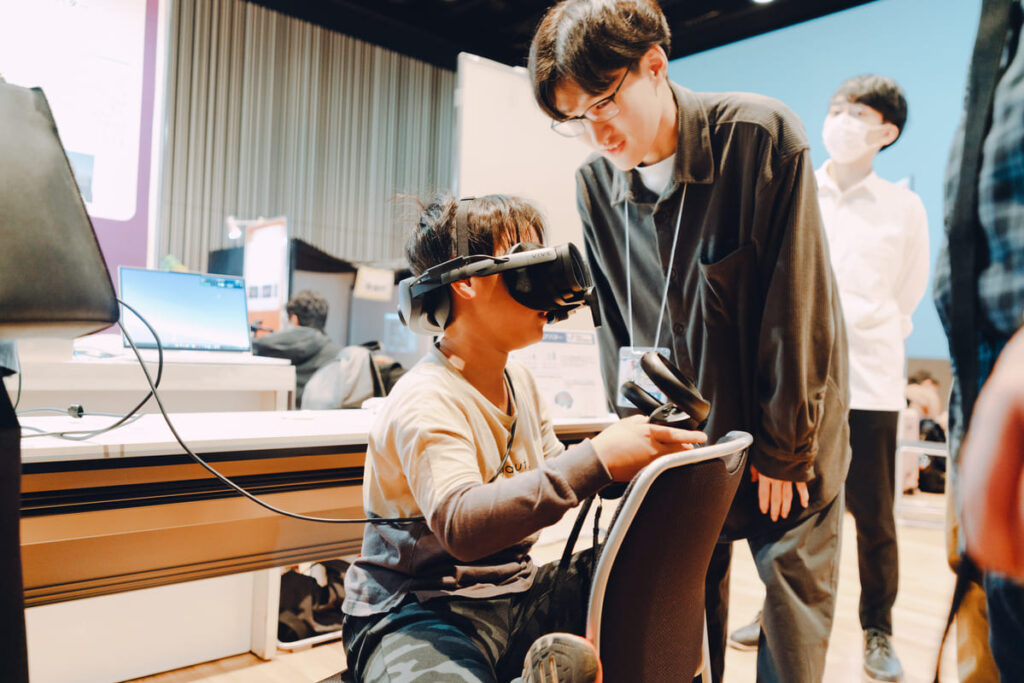
Building on the exploration of sensory diversity, the “Expanding Potential” area invites visitors to experience how technology can enhance our individual abilities and unlock new possibilities. Humans connect with the world through sight, sound, and touch. From traditional tools like eyeglasses to cutting-edge brainwave analysis, technology has always complemented—and at times, transcended—our natural capabilities.
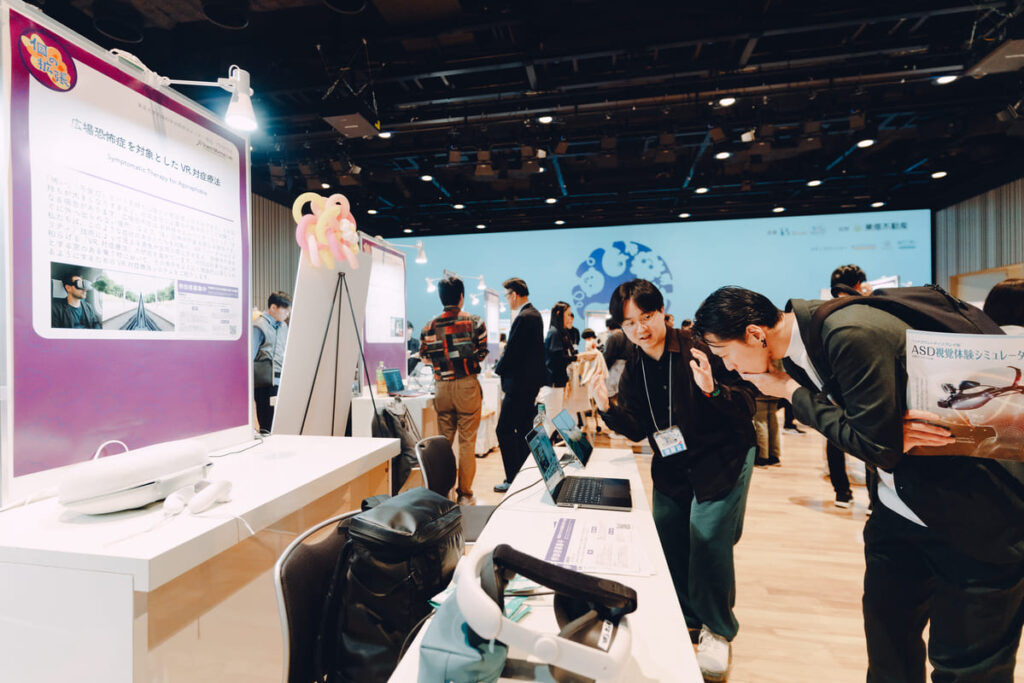
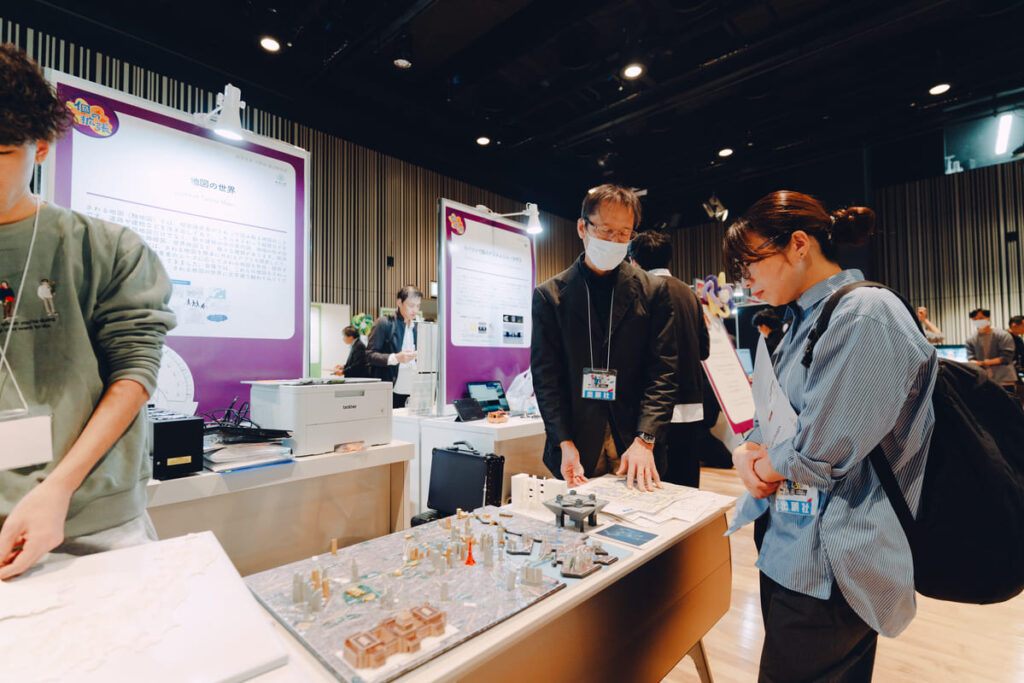
This zone featured 10 exhibits illustrating how technology broadens our connection to the world. Highlights included brainwave-driven applications, “Tactile Maps” that allow spatial understanding through touch, and “expression-amplifying avatars” that resonate with the user’s brain. Other immersive experiences included VR setups designed to boost the “I can do it!” feeling and exhibits that analyzed communication challenges through body movement. Together, these displays offered a tangible glimpse into the future of our daily lives.
- What is personal extension? (B Lab)
- Experience the World of Holography (KDDI Research, Inc.)
- Creating a digital replica of the brain on a supercomputer (The University of Electro-Communications)
- The World of Tactile Maps (Watanabe Lab, Faculty of Engineering, Niigata University)
- Enter a new world on top of the one you always see! (National Institute of Information and Communications Technology (NICT) Advanced ICT Research Institute, Center for Information and Neural Networks (CiNet))
- Facial-Expression-Enhanced Avatar: Synchronizing Brains (Meiji University)
- VR Experience System to Boost the Feeling of ‘Yes, I Can Do It!’ (Brain Science Institute, Tamagawa University)
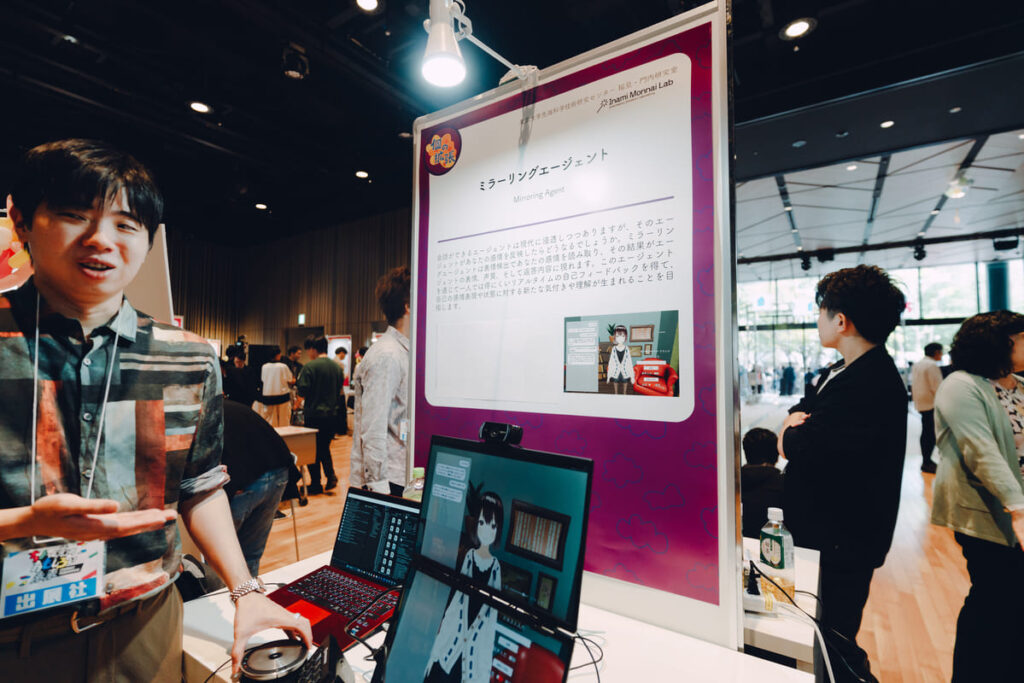
- Mirroring Agent (Information Somatic Laboratory, RAST, U-Tokyo)
- Observing the difficulties in academic and communication skills thorugh eye movements patterns. (Developmental & Clinical Psychology Lab, Waseda University)
- VR Symptomatic Therapy for Agoraphobia (Information Somatic Laboratory, RAST, U-Tokyo)
Change One’s Environment
The “Adapting Environments” area focused on how adjusting our surroundings—not just physical spaces, but also social systems, rules, customs, and interpersonal relationships—can redefine our “normal.” These changes have the power to remove barriers to daily living and lead to more comfortable, fulfilling lives for everyone.
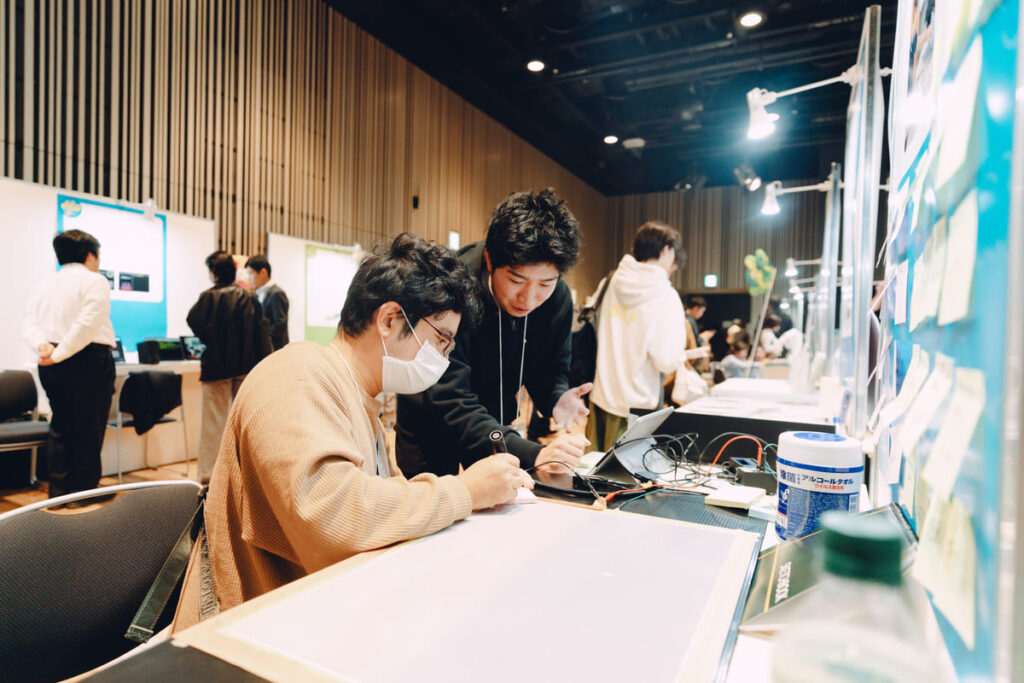
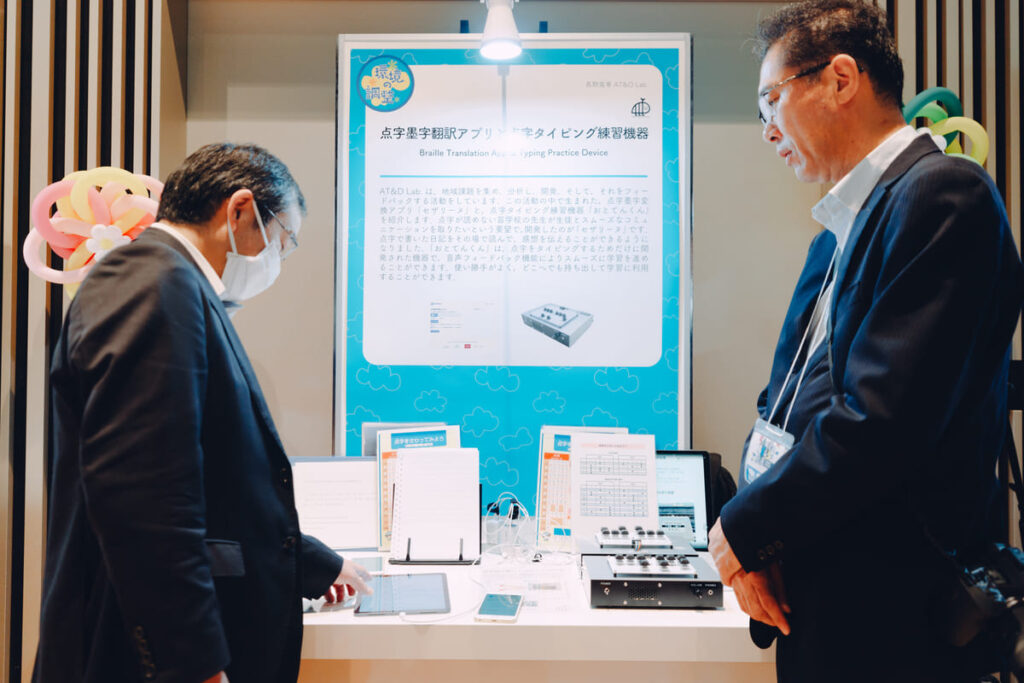
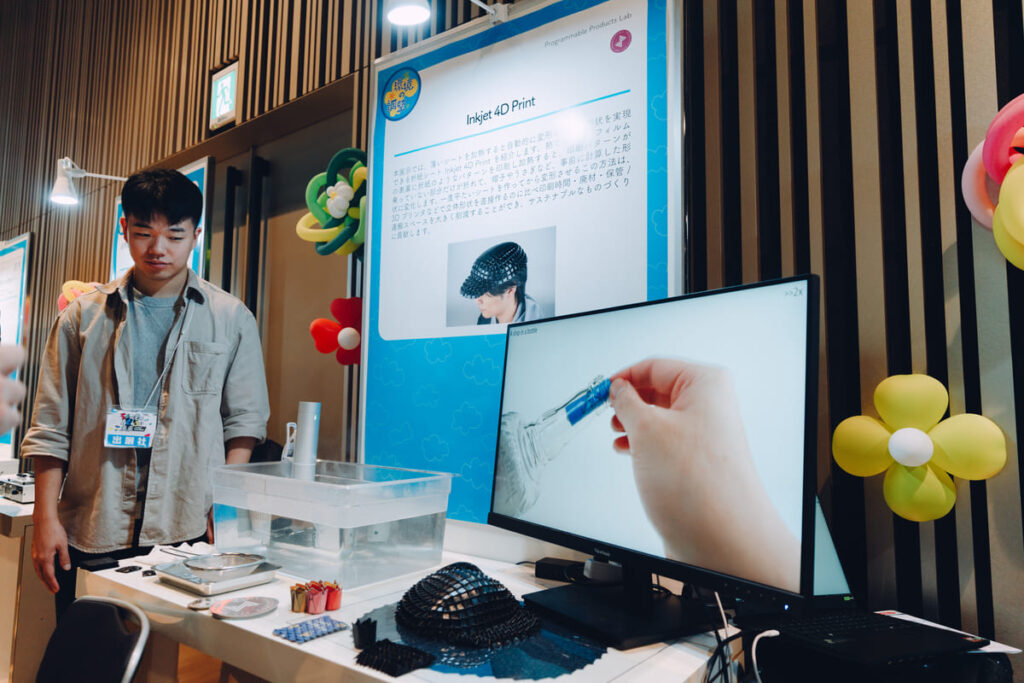
This zone featured 13 exhibits showcasing diverse ways to adapt the world around us. Highlights included immersive displays on how environmental changes affect human perception, a “tactile canvas” that uses static electricity to create textures, and assistive technologies like Braille-to-print translation apps. Other innovations included child-monitoring systems, interactive AI robots, voice and emotion recognition for communication support, and chatbots designed to offer creative solutions for everyday challenges.
- How does the environment affect it? (B Lab)
- What if Traffic Lights weren’t Red and Green? (B Lab)
- Tactile Canvas: Let’s create a feeling of touch with static electricity on white paper (University of Tsukuba, Kawaguchi Electric Works)
- EuLa Online Middle School : Study Anywhere (EuLa Online Middle School)
- Braille Translation App (National Institute of Technology, Nagano College. AT&D Lab.)
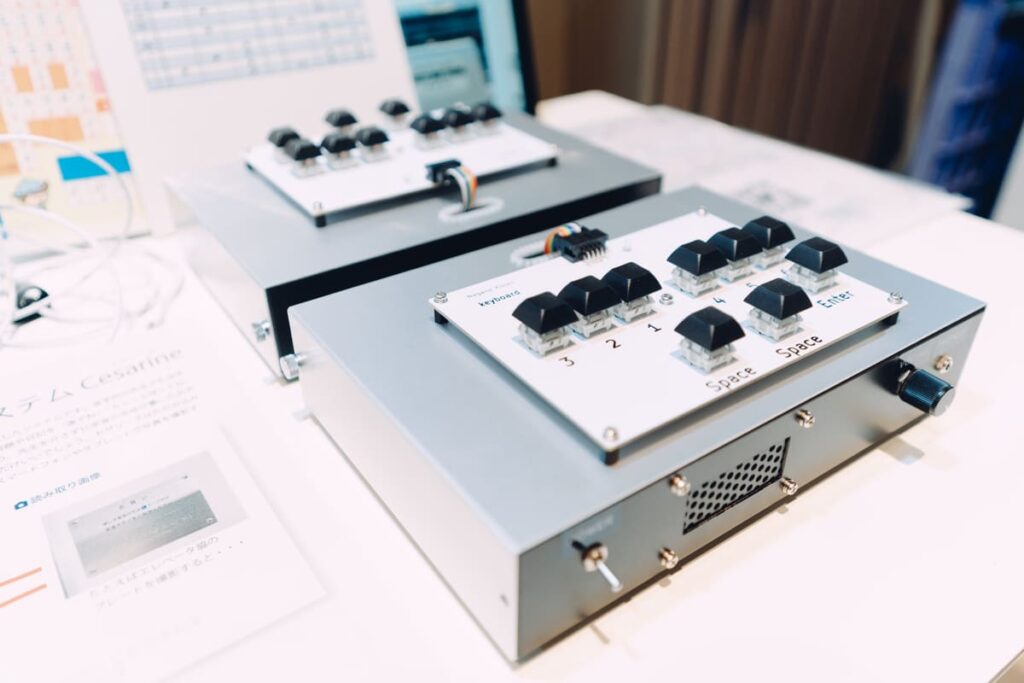
- Typing Practice Device (National Institute of Technology, Nagano College. AT&D Lab.)
- Feel the Beat: How Rhythm Can Heal Tremor (Meiji Univresity Health Science and Medical Engineering Lab.)
- YOSS: Expanding eyes and hands on children to leave no child behind (Yamano Noriko Lab., Osaka Metropolitan University)
- Dabot, the chatbot that offers solutions to your challenges (Dabot Project in University of Tsukuba)
- ‘Komarigoto Cards’ -Difficulties Cards- (B Lab)
- An AI-powered dialogue robot: Sharing “like” experiences with your family living apart (Hiroi Lab. , Osaka Inst. of Tech. / Ito and Nose Lab. , Tohoku Univ.)
- Inkjet 4D Print (Programmable Products Lab)
- Speech and Emotion Recognition for Communication Support (Ritsumeikan University Spoken Language Laboratory)
Create a Society
The journey concludes with the “Shaping Society” area. After exploring the previous zones, visitors are invited to reflect on two core questions: “What have you discovered?” and “What can we do to build a neurodiverse society?”
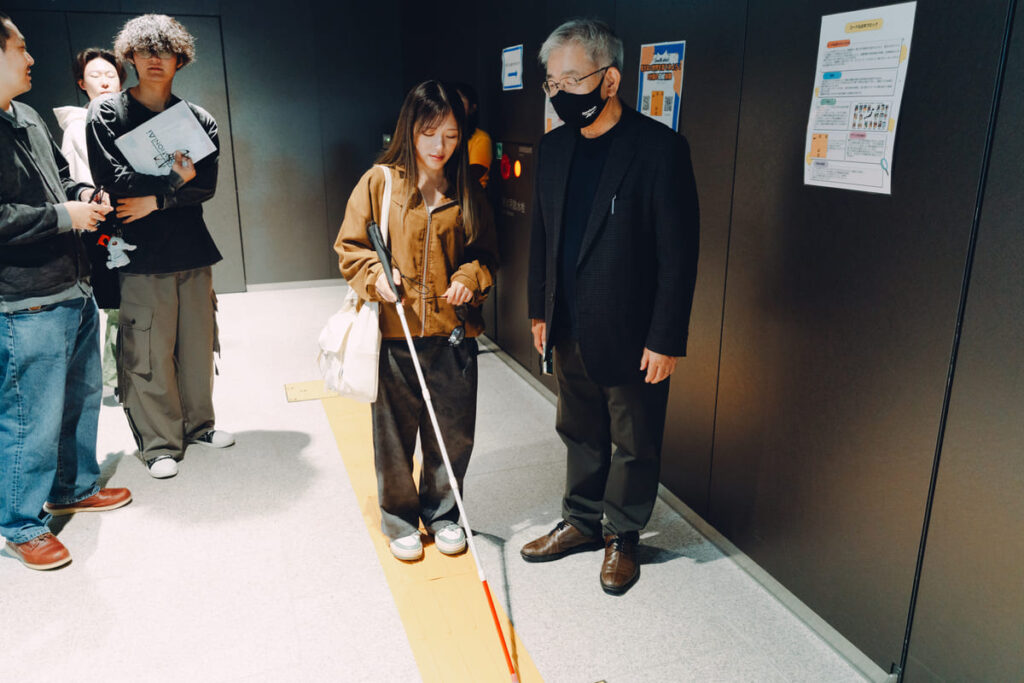
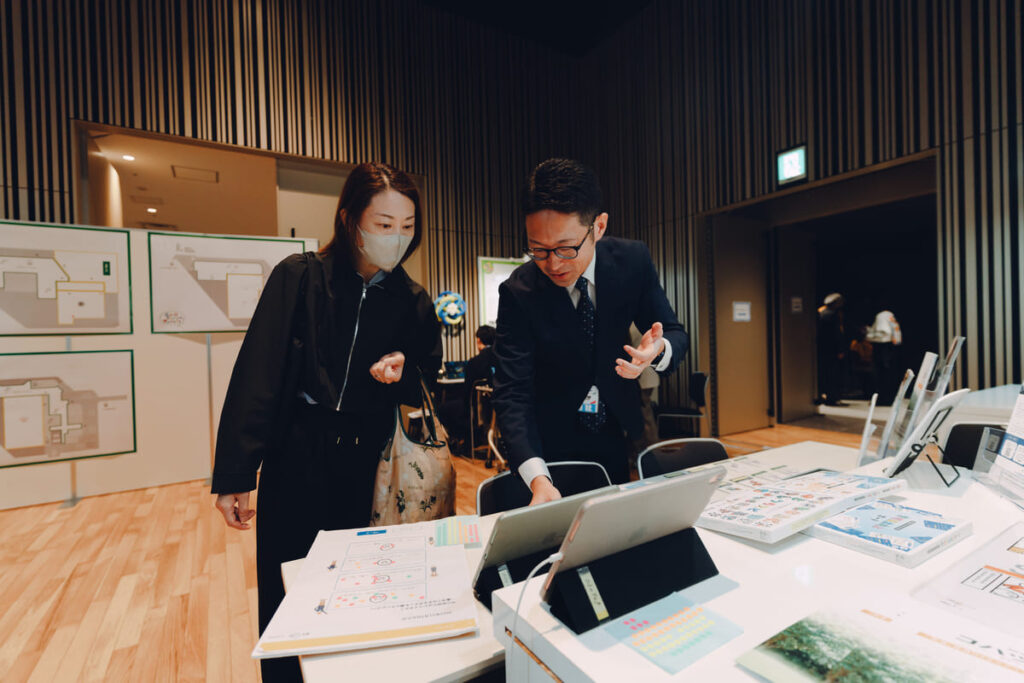
Even though we share the same physical space, the person next to us may be inhabiting a completely different “World in Our Minds.” This final area featured 19 exhibits designed to inspire action. Highlights included inclusive games playable without sight, “talking” Braille blocks that are easier to locate, and “Komarigoto Translation,” which helps rephrase daily challenges into easy-to-understand language. There was also a collaborative mapping project to share environmental perceptions and personal feelings. Collectively, these exhibits transformed the area into a space where everyone could envision their own role in creating a society where everyone can thrive.
- From Watching to Creating — “MAFA gumi”, a Creative Tool that Inspires New Ways of Working (DENTSU SOKEN Solution Development center)
- OriHime (OryLab Inc.)
- No Sight, All Play –Inclusive Gaming (National University Corporation Tsukuba University of Technology)
- Easy-to-find, talking braille blocks (Kanazawa Institute of Technology)
- Spirit Overflow (AXEREAL,inc. / Superhuman Sports Project)
- Eye-friendly Mahora notebook (© Oguri Corporation)
- HAKKAKU (AXEREAL,inc. / Superhuman Sports Project)
- Translation of Everyday Challenges (B Lab)
- SlideRift (AXEREAL,inc. / Superhuman Sports Project)
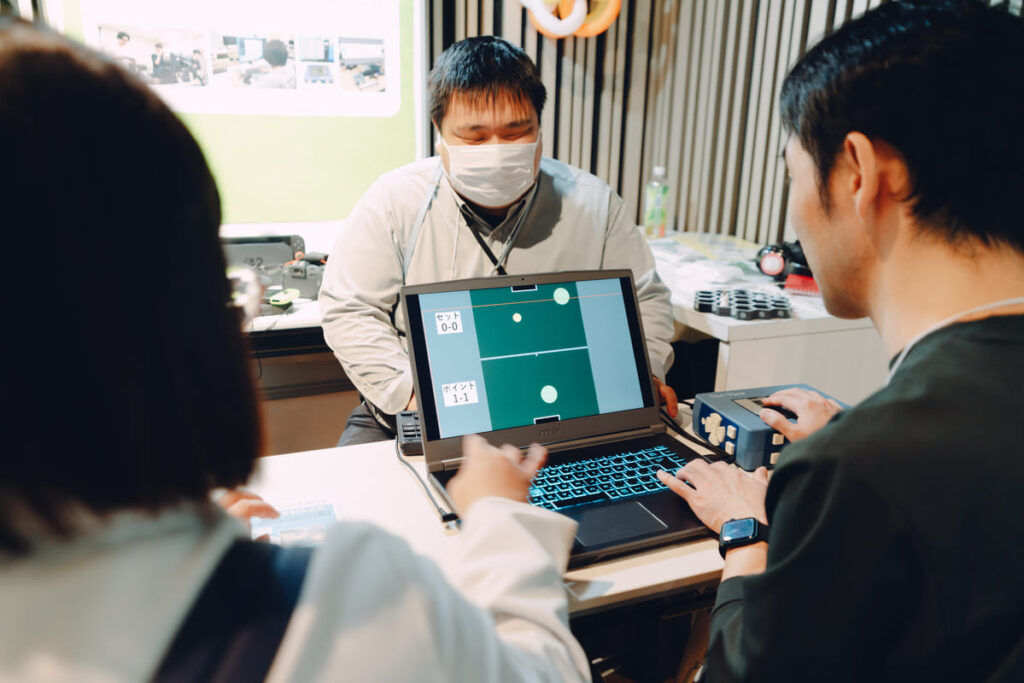
- Ping x Phone: Diversification of Table Tennis Designs Using Smartphones (Activity Information Science Laboratory, Aichi Institute of Technology)
- Ethical, Legal, and Social Implications concerning Neurotechnology (①NICT-Center for Information and Neural Networks (CiNet) ②Respi:re Project, Graduate School of Media Design, Keio University)
- Neurodiversity Award (B Lab)
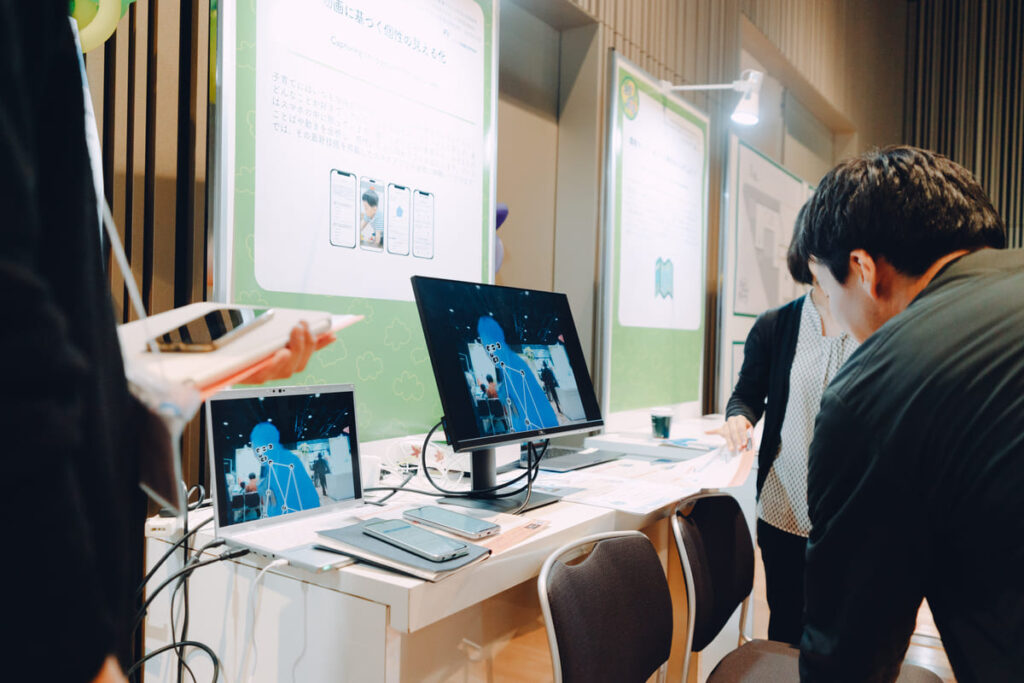
- Tell Me Your Heart – Dayken & Gemiwa – (JST-Mirai Program Society Optimized for Diversity mission area “Development of Data Utilization Technology to Support the Individuality and Well-being of Diverse Children”/ Fvital inc., Institute of Child Developmental Science Research, Hamamatsu University School of Medicine)
- Capturing child growth through video (JST-Mirai Program Society Optimized for Diversity mission area “Development of Data Utilization Technology to Support the Individuality and Well-being of Diverse Children”/ Fvital inc., Institute of Child Developmental Science Research, Hamamatsu University School of Medicine)
- Environment Map: Let’s share your discoveries! (Foundations of Digital Embodied Economics, Grant-in-Aid for Transformative Research Areas (B)(ended in FY2023)+ B Lab)
- Body Map: Let’s write down feelings as they come! (Foundations of Digital Embodied Economics, Grant-in-Aid for Transformative Research Areas (B)(ended in FY2023)+ B Lab)
- Let’s Create Together! ‘Superhuman Sports DIY’ (Superhuman Sports Project / Arc & Beyond Association, Inc.)
- My Brain World (B Lab (Produced by: Team JSB-G – Kiri Akahori Konomi, Naotsugu Taniguchi))
- Brain Body Jockey Project: We can Thrive (Change Tomorrow Executive Committee, AXEREAL, Inc., WITH ALS, Project Cybernetic being, OryLab Inc., Dentsu ScienceJam Inc., The World in Our Minds (B Lab Neurodiversity Project))
Closing Reflections
Since 2023, we have hosted this annual event to raise awareness of neurodiversity among a broader audience. With each passing year, the scale of participation and exhibition has grown. This year, we were proud to host a record number of interactive exhibits from across Japan’s industrial, governmental, and academic sectors, welcoming more visitors than ever before.
The feedback from our visitors was truly inspiring. Many shared that they “learned about brain perception through mysterious tactile experiences” or that the exhibits helped them realize that “the world I see is not the only reality.” These comments reflect how the event served as a powerful catalyst for discovering new sensory perspectives.
Exhibitors also found the event highly meaningful. For them, it was not only a platform to share their research and technology with a diverse audience but also a valuable space for community building. Many noted the significance of seeing visitors’ reactions firsthand and the opportunities for new collaborations among fellow researchers.
Finally, we would like to express our deepest gratitude to all the exhibitors, participants, and supporters who made this event possible. Moving forward, we remain committed to promoting the understanding of neurodiversity through immersive experiences. Our goal is to continue working toward a society where every individual can fully embrace their unique identity and unleash their true potential, wherever they may be.
For inquiries about this matter, please contact: info at neuro-diversity.world