
IT Engineers with Disabilities Work Full Remote and Full Flexible Hours – JGC Parallel Technologies, Inc.
11/28/25
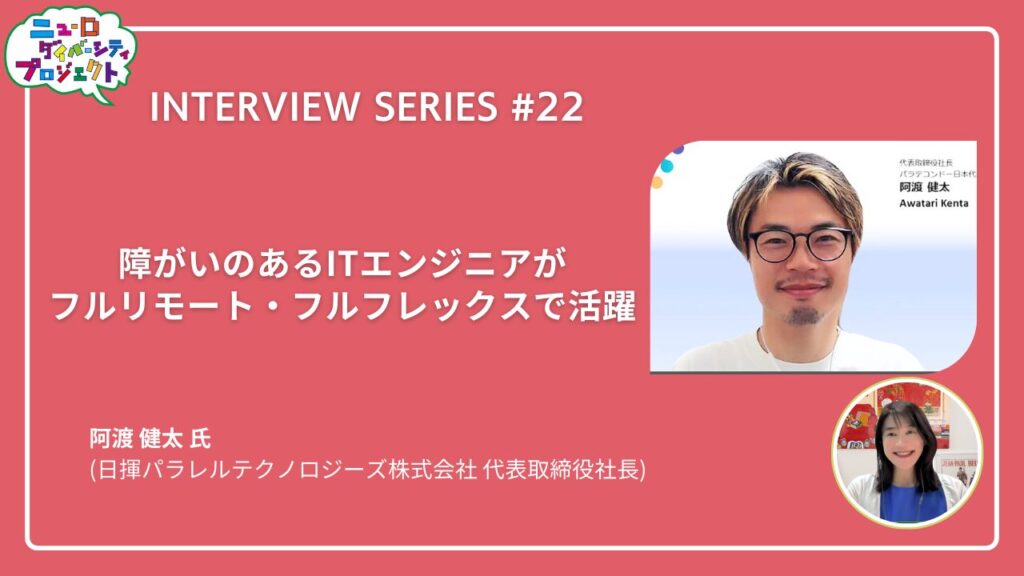
The Neurodiversity Project, sponsored by B Lab, aims to realize a society where everyone is empowered to be who they are by respecting the diversity of the brain and nervous system. In this Neurodiversity Project interview series, we will introducethe efforts of JGC Parallel Technologies, whose mission is to realize a society where all people can work as equals, regardless of their disabilities. Nanako Ishido (Picture 1), Director of B Lab, spoke with Kenta Adachi (Picture 1), President and Representative Director of JGC Parallel Technologies, which is taking on the challenge of diverse employment and achieving results, about the background and specifics of the initiative and its future prospects.

The reason why employment of people with disabilities is not progressing is
The challenge lies not in the individual disabled person, but in the company’s system.
Ishido: “Hello everyone. In the Neurodiversity Project interview series, we have Mr. Kenta Awatari from JGC Parallel Technologies here with us today. Could you start by telling us about the efforts related to neurodiversity at JGC Parallel Technologies?”
Mr. Adachi: “I myself was born with congenital bilateral upper limb disabilities and was born with disabilities in both hands. 2005 I joined the current JGC Holdings and established JGC Parallel Technologies (“JPT”) in 2021. I was initially Vice President, but became President and Representative Director in 2024.
The JGC Group is a general engineering company founded in 1928 and will soon celebrate its 100th anniversary. Its business focuses on plant construction in the energy, chemical, and environmental fields, and also manufactures functional and cosmetic materials. The group has over 8,800 employees, capitalized at 23,885,790,000 yen (as of March 31, 2025), and 259,481,819 shares (as of March 31, 2025). Recently, in addition to the plant business, the company has been involved in a variety of other businesses, such as making aircraft fuel from waste cooking oil and conducting land-based mackerel aquaculture.
JPT has been in business for five years since its establishment in 2021. We have 51 employees, 48 of whom are physically or developmentally challenged. Our business is responsible for supporting IT operations within the JGC Group, and we receive orders from JGC Group companies to develop systems for DX promotion, etc., which are developed by our IT engineers with disabilities.
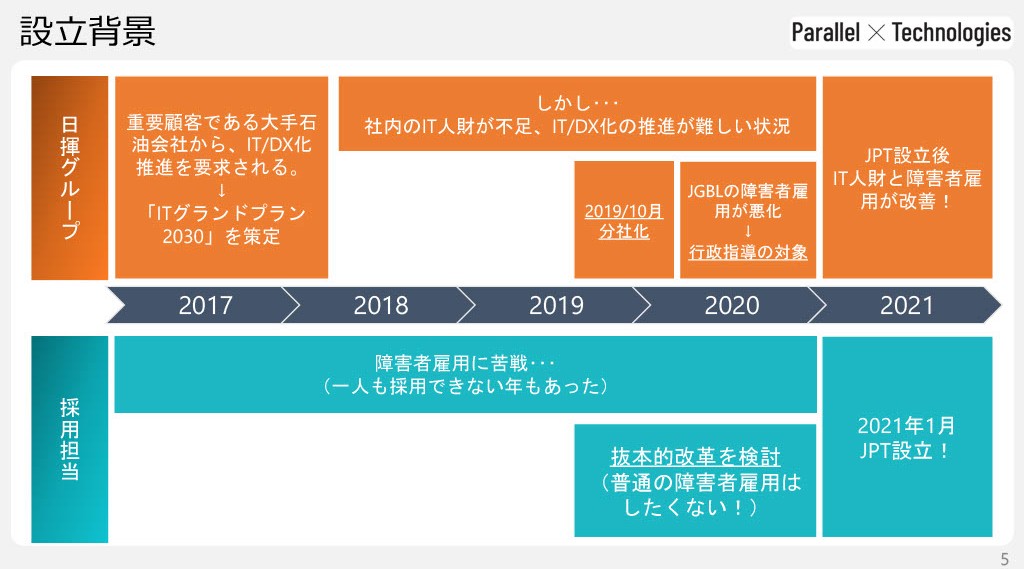
Let me explain the background behind the establishment of JPT: In 2017, the JGC Group was told by a key overseas customer that if we did not promote IT/DX, we would be ‘left behind’. Therefore, we created an IT grand plan, but the JGC Group lacked IT personnel.
In the midst of all this, JGC Corporation was split into three companies in October 2019. At that time, people with disabilities who originally worked for one company were unevenly distributed among the three companies. However, it became difficult to hire people with disabilities because the work of one of the three companies, JGC Global, required special skills such as English for its overseas plant business. I was in charge of hiring at the time, and we had a very difficult time hiring people with disabilities. Even after the final interviews, we were still unable to hire them because of the difficulty of the work. Under these circumstances, I thought that the problem was not with the people with disabilities, but with the company’s system, and from around 2019, I began to consider drastic reforms.
Therefore, we decided to establish a special subsidiary in January 2021 to employ IT personnel, thereby simultaneously solving two problems that the JGC Group had originally faced: the shortage of IT personnel and the lack of progress in employing people with disabilities. JPT was established against this backdrop. (Picture 2)
JPT’s very unique approach has been featured in various media outlets, most recently on TBS TV’s “news23.
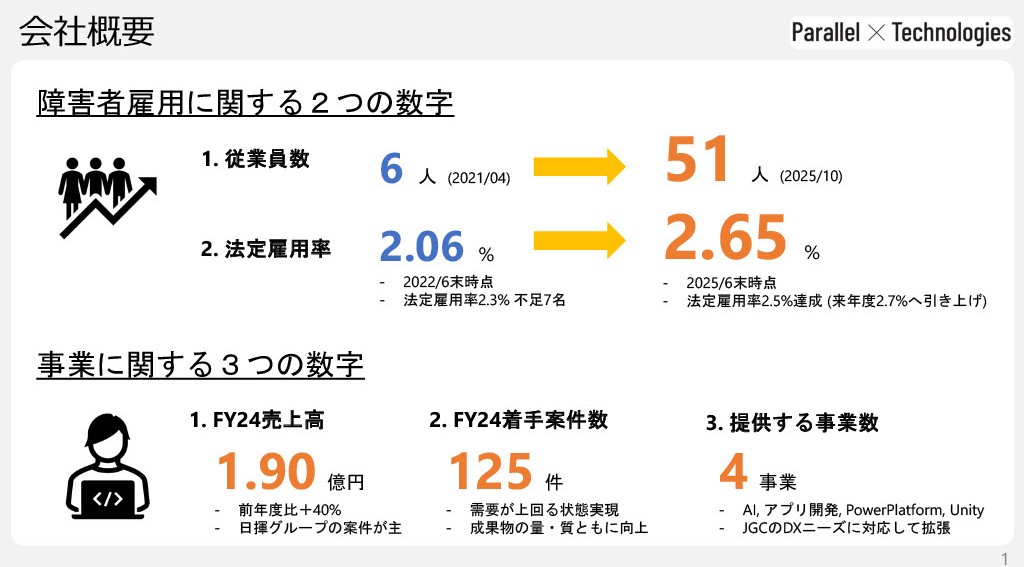
Let me explain a little more about JPT. The number of employees started out with 6 and has now grown to 51. The legally mandated employment rate for persons with disabilities is 2.5%, but when JPT was first established, the rate was 2.06%, which was unachievable. Currently, the rate is 2.65%, which is higher than the legally mandated rate.
Last fiscal year, sales were 190 million yen, and the number of projects initiated is 125 per year. We receive orders from JGC Group companies. We are mainly involved in four areas: AI-related solutions, web application development, Power Platform, a no-code/low-code development platform, and development using Unity, a virtual space development platform. (Picture 3)
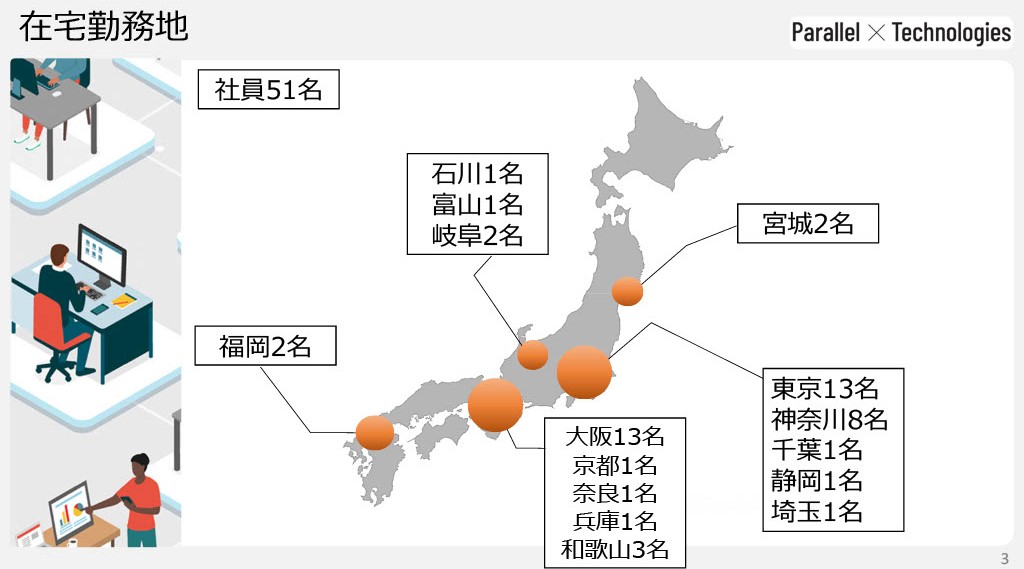
In terms of employee composition, 88% have mental developmental disabilities, 6% have physical disabilities, and 6% are able-bodied. The age structure is 63% employees in their 30s, followed by employees in their 20s and 40s. The company is fully remote and has no actual offices, with employees hired from all over the country working at full remote locations. We have employees mainly in Tokyo, Kanagawa, Osaka, and other major cities, as well as Miyagi Prefecture in Tohoku, Ishikawa, Toyama, and Gifu Prefectures on the Sea of Japan side, and employees in Kyushu as well. (Picture 4)
One person, one job” system.
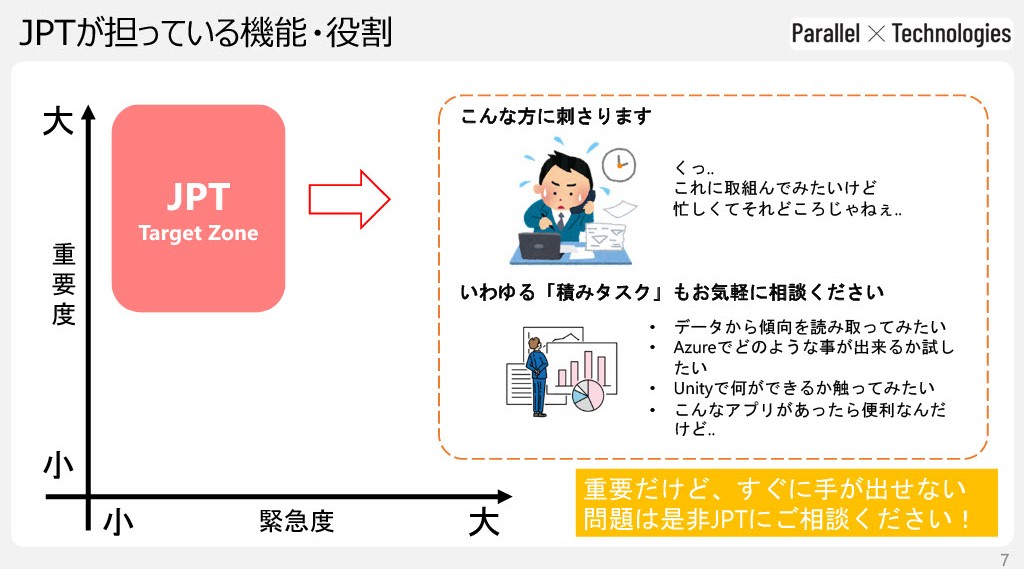
Responsible for highly important but non-urgent tasks.
JPT has established a distinctive work system and system for employees to demonstrate their abilities. This is the “one person, one job” system. (Picture 5)
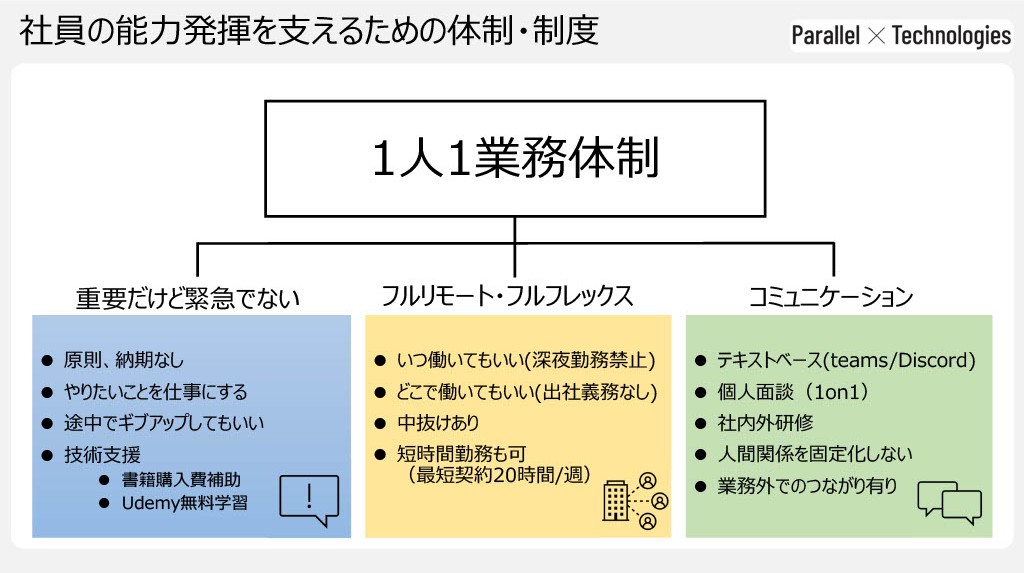
Before JPT was established as a company, we introduced an internship program and experimented with a way of working. At that time, a single IT job was undertaken by a team of several people, but due to frictions and conflicts in human relations, the job sometimes did not go as smoothly as we would have liked. We then tested the hypothesis that it would be more stable to have one person handle a single job, and it worked out well. We are still using this “one person, one job” system today. We now have 51 employees, so there are 51 projects in progress at any given time.
The first factor is that we receive “important but not urgent” work. For example, in the JGC Group’s overseas plant business, deadlines are extremely important, and even a one-day delay can result in a loss of hundreds of millions of yen. Therefore, we are too busy with day-to-day business operations to take any action on IT/DX. In other words, there are tasks in the “important but not urgent” area that “we would like to work on someday but cannot start” and “important but not urgent. We help them. In principle, this type of work has no deadlines, allowing our employees to work at their own pace without feeling the pressure of deadlines.
The second is “Full Remote and Full Flex”. You can work whenever and wherever you want. Basically, you can work from home, but some people choose to work at cafes, libraries, or other places where they can best demonstrate their abilities, and they can also choose to work morning or evening hours when they are most likely to produce results. I ask people to “choose the environment in which they can best demonstrate their abilities.
Third is communication. Basically, our communication is mainly text-based. We hold meetings online, but some people may not understand after just one meeting, so we basically give instructions via text. This way, we can prevent mistakes later on, and since it is recorded, we can review it as many times as we like. Individual interviews are also held on a voluntary basis.
Next, I will explain JPT’s unique business scheme. Picture 6)
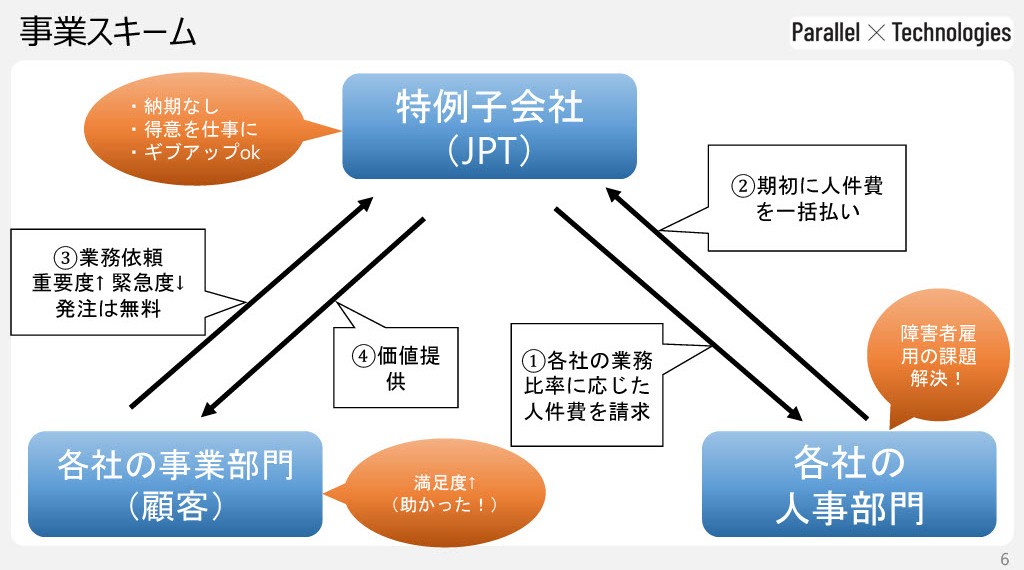
At the beginning of each fiscal year, JPT invoices the human resource departments of the JGC Group companies for the expenses necessary to run the business (employee personnel expenses) and receives a lump-sum payment. In other words, at the beginning of the fiscal year, JPT obtains the necessary funds to run its business for the year, and JPT charges each JGC Group company a percentage of the IT and DX projects it undertakes.
Our clients’ business units actually ask us for “important but not urgent” projects. They ask us for “important but non-urgent” projects, such as “Can’t we use IT to streamline certain operations? The point is that the business units of each company can use these development projects and request them from us at no cost. This is because the HR department of each company pays for the order to us in the form of personnel expenses at the beginning of each fiscal year. Then, we develop systems and other services for the work we receive, and provide value to the client.
JPT’s function and role is to respond to “important but non-urgent work” that each business unit has. We believe that this is a job that large companies have a need for. (Picture 7)
The actual number of projects we have worked on is 125 in FY2024. There are three main pillars of work: AI/machine learning, tabulation work, web applications, and 3D model development. (Picture 8)
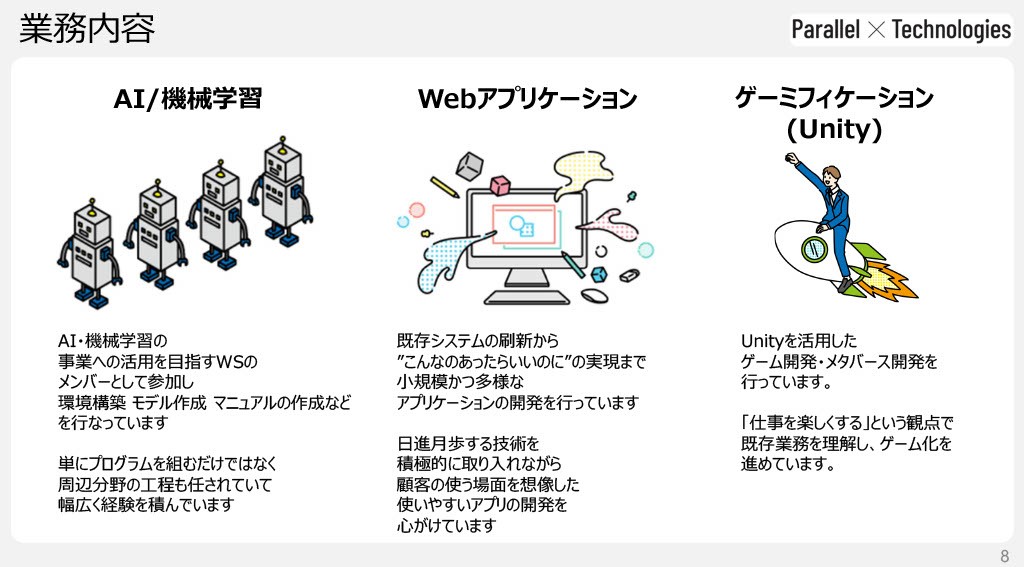
In the area of AI/machine learning, for example, we have developed a system that uses AI to automatically estimate and determine whether fish farmed on land have grown to the appropriate size for shipping, and web applications such as an attendance management application and an application that extracts highlighted parts of a PDF file. We develop a wide variety of small-scale applications ranging from innovations of existing systems to the realization of “what I wish I had” applications. In Metaverse, we have conducted training sessions in a virtual space, held events with labor transition support offices across Japan, and created a garbage sorting game that corresponds to Yokohama City’s garbage sorting system.
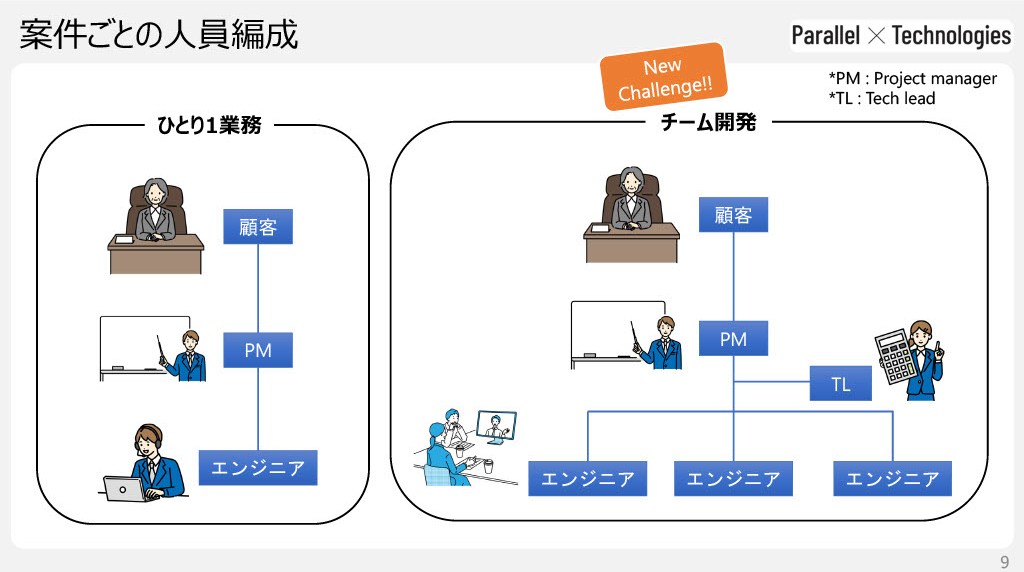
This is a new system in which a project manager sits between the client and our IT engineer who is in charge of the job. Recently, we have had an increase in the number of employees, and we have heard some say, “I want to do a bigger job,” or “I want to do a more high-skilled job. So we are gradually starting to work on team development. (Picture 9)
Good people and good work
Great value is created through good people and good work.
We would like to share with you our thoughts on the ideal relationship in the employment of people with disabilities. We believe that great value can be created by having “good people” and “good work. (Picture 10)
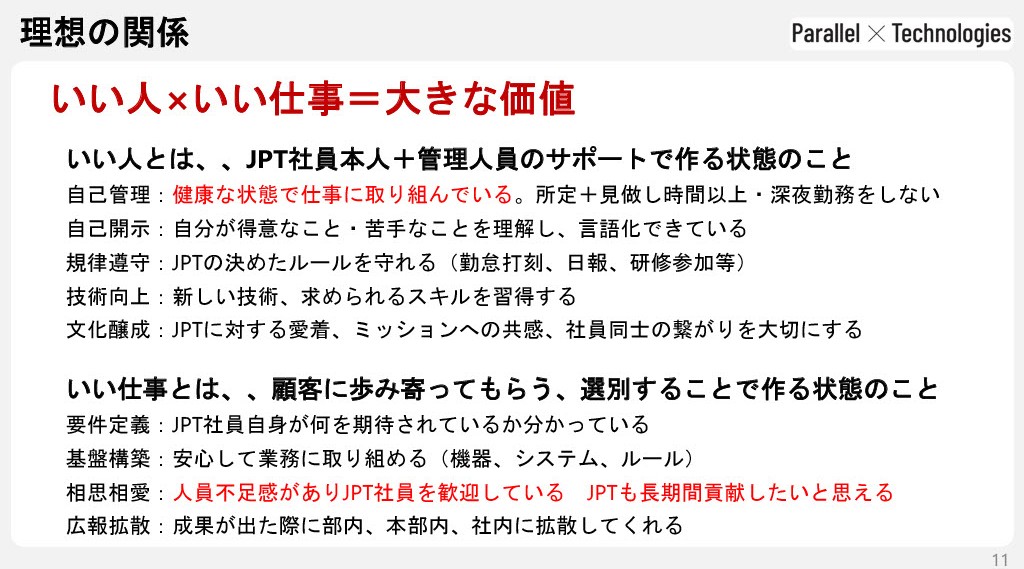
First of all, the definition of a ‘good person’ is the state of being created by our employees and the project managers who support them. In particular, they must be self-disciplined and healthy, understand and verbalize what they are good at and what they are not good at, adhere to the rules of the company, enjoy learning new technologies because they work in the fast-evolving IT field, be attached to JPT, and foster a culture that values empathy for our mission. Fostering a culture that allows you to be a “good person” is the definition of a “good person.
A ‘good job’ is a state of affairs that can be sorted out by having the customer walk up to you. Understanding the customer is also important. As for requirements definition, it is important that JPT employees know what is expected of them. In infrastructure building, it is about being able to work with peace of mind. And above all, it is important to be compatible: it is important that they welcome JPT employees because of the lack of IT personnel, while JPT also wants to contribute to the department for a long period of time.
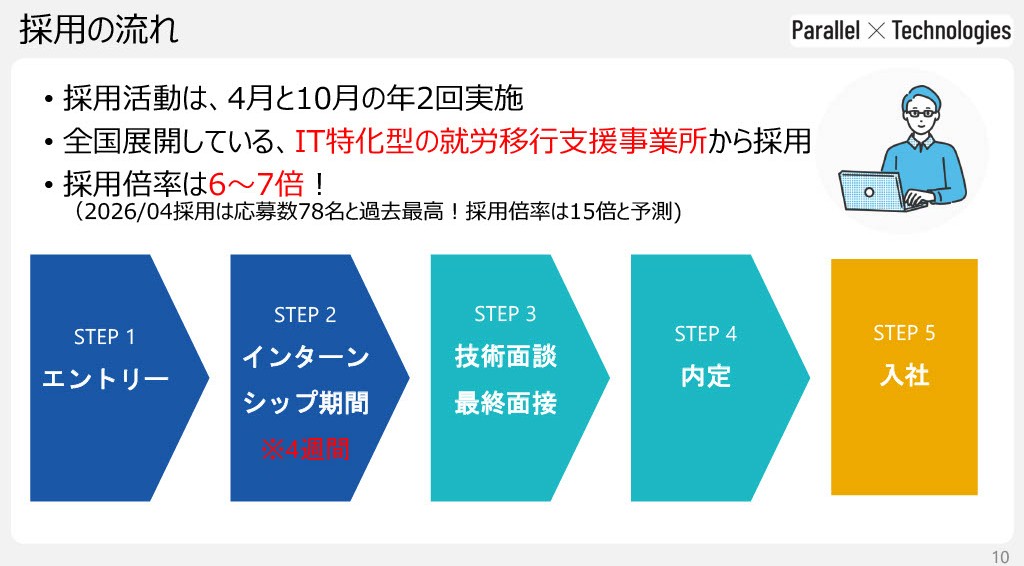
Recruitment is currently at 51 employees, having hired 6 at the time of establishment and then 12 to 14 per year for the first year. Recruitment is conducted twice a year, in April and October. We hire mainly from labor transition support offices that specialize in IT, which are located nationwide. The recruitment ratio was initially 1 to 2 times, but now it has risen to 6 to 7 times, and the competition is high. (Picture 11)
One of our features is that we offer a 4-week internship program. We do it all online, and we provide them with assignments for them to work on for a month to check their technical skills. At that point, we do not have to disclose who has what disabilities, so we only check their IT technical skills.
Only after the final interview do they disclose the “type of disability,” “disability grade,” “what they are not good at,” “what they are good at,” etc., and finally they receive an offer to join the company.
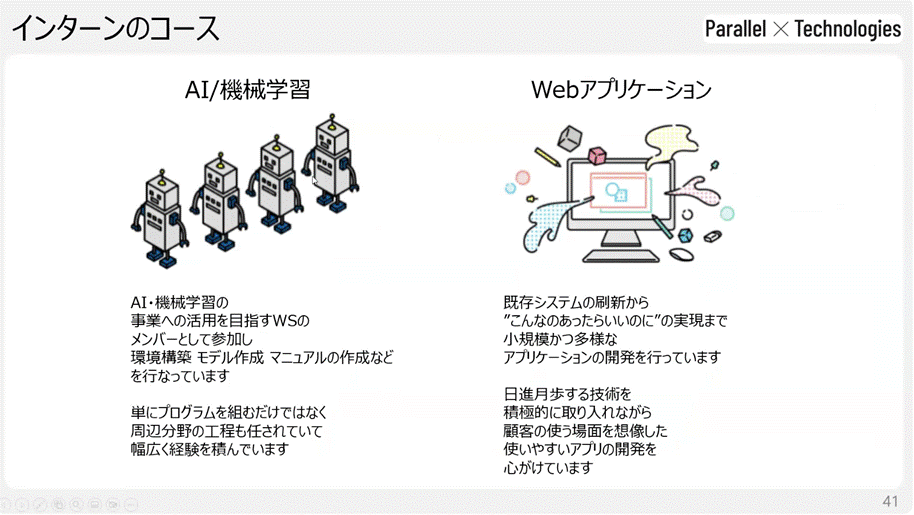
The internship has two courses, AI/Machine Learning and Web Applications, among others introduced in the work. (Picture 12)
We also set some notes about the interns. (Picture 13)
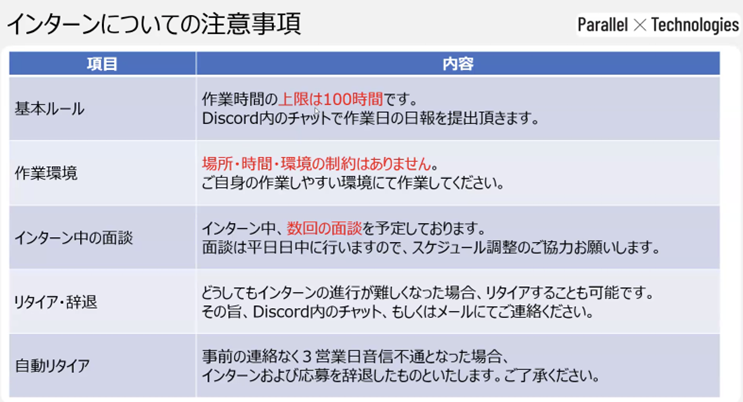
The upper limit is set at 100 hours, and by having students work on difficult tasks within that limited time, we look at their ability to make their own schedules and prioritize their work. In fact, when you join JPT and work with clients, you will find yourself in a similar situation. There are no deadlines, but to some extent, you have to set your own schedule and proceed with the work.
As a promotion, our company has an official NOTE and Instagram, so if you are interested, I would be happy to take a look. That’s all. Thank you very much for your attention. (Picture 14)”
Reimport” JPT’s initiatives to the entire JGC Group
and spread it widely throughout the JGC Group.
Ishido: “Thank you very much. You have taken a very pioneering approach, and I felt that this is a presentation of a new way of working that will be of great help to many companies.
I would like to ask a few questions. At the beginning of the presentation, you mentioned that one of the challenges in hiring people with disabilities is that “hiring does not progress because people say there are risks at the final interview. You also pointed out that there may be a problem of attitude and awareness on the part of companies.
What specific risks have been pointed out within the company? Also, if these risks are not inherent in the individual with disabilities, but rather are issues that stem from the organization itself, please tell us about the efforts you have made to remedy them.”
Mr. Adachi: “In a nutshell, JGC is a large organization with a very generous safety net in place. The safety net itself was a bottleneck. In the case of JGC, if an employee takes a leave of absence due to illness or other reasons, he or she will continue to receive salary for several years because of the generous safety net. This is a great benefit for employees, but when it came to hiring people with disabilities, it was perceived as a “risk” by interviewers, executives, and the company itself. They would think, “There is a possibility that this person will take a leave of absence,” or “There is a possibility that this person will not work for several years and continue to pay for it,” and they would decide not to hire them because it was a risk. Our recruiters felt that our system was strangling them, even though we said we wanted to promote diversity and inclusion.”
Ishido: “I understood that the purpose is to prepare in advance a “way of working that does not lead to that” in order to resolve such issues. From what you have told me, you are building a system that allows each person to work as he or she is and for the long term, by introducing full remote work and using online tools to prevent discrepancies in communication, allowing one person to focus on one job, and making work with no deadlines, among many other innovations. We were able to get a good sense of how the company is building a system that allows each individual to work in their own way and over the long term. In addition to building such an overall system, please tell us about any other efforts you are making to create an environment in which everyone can work comfortably over the long term, such as training and support systems for supervisors and coworkers of people with disabilities, and the division of work according to individual characteristics.”
Mr. Adachi: “We are doing several things. For example, when the JGC Group as a whole holds internal events, we naturally participate by having employees with disabilities take the stage and talk about their disabilities to raise awareness among able-bodied people. When we do this, we often receive comments such as, “That’s pretty normal,” “Surprisingly, you can work,” or “That’s rather amazing. People just don’t know about it, so we are conducting several such activities to raise awareness.
The other thing is for the client who actually does the work. Our IT engineers and the client work together, and at that time, we disclose the strengths and weaknesses of the person with disabilities. For example, “I prefer text-based work,” “I can’t speak online, so please use text,” or “I’m not good in the morning, so please hold meetings after noon. From a long-term perspective, JPT was created to hire people with disabilities, and I hope to eventually “reimport” the JPT system to the JGC headquarters, so that people with disabilities working at JPT can spread out to the headquarters, where they can all be active. We still have a long way to go, but I hope to raise awareness of the JPT system through activities such as company-wide events, and then to reimport the system from JPT to the head office.”
Ishido: “I feel that an environment that allows people to work in a way that suits each individual, no matter who they are, has the potential to improve the performance of both the individual and the company. On the other hand, Japan has systems such as the legally mandated employment ratio and quotas for employment of persons with disabilities, which I hear is unique even from an international perspective. While these systems give workers a sense of security, some say that they also create a line of demarcation with general employment. In fact, there are many people, especially those with mental or developmental disabilities, who wonder whether they should obtain a disability certificate or not, or whether they should work under the employment system for people with disabilities or under the general employment system. Of course, it depends on each individual’s situation, but we have heard that there are people who have such concerns in reality. In light of this situation, we would like to know how your company views these systems, and what you think they should be like in the future.”
Mr. Adachi: “I personally do not think that the employment rate of people with disabilities is necessary. However, I understand the intention of setting such a numerical target and having a certain number of people with disabilities employed in order for society to function well. Our company was established because we originally had a problem with the employment rate of people with disabilities. We have been working for five years to achieve that number first, and we have now achieved it. The employment rate for people with disabilities will increase to 2.7% next year, so we will have to hire more people. Conversely, the idea is to use the idea that we can hire people and do what we want to do. The employment rate for people with disabilities is a social responsibility that must be fulfilled, so I feel that we are having fun with the idea of using this quota to do more interesting things.”
Ishido: “I felt a strong desire to make good use of the existing system while bringing it closer to the realization of the society we envision.
I would like to ask you one more point. When I asked you earlier, “What do you mean by risk?”, you pointed out that the safety net itself may in some cases create risk, that is, it may give organizations the burden of “having to keep paying even if they don’t work”, I think you pointed out that the safety net itself creates risk in some cases.
On the other hand, one of the reasons why neurodiversity has begun to attract attention overseas is the data published by the Harvard Business Review, which states that “teams that include diverse neurodivergents are 30% more productive. I personally believe that creating an environment in which a diverse workforce can work as a company as a whole will promote productivity and innovation, and I think it is important to demonstrate this.
From this perspective, we would like to hear about any actual changes in your company’s relationship with the head office, or any positive effects in “reimporting” the system to the head office, as you mentioned earlier.”
Mr. Adachi: “We are still halfway there. We have been working together for five years now, and I believe that the way we view JPT has changed. We started out as a company that employed people with disabilities, but now we are positioned as an excellent IT group, and we are not seen as a company that employs people with disabilities. I think this is the result of our efforts over time.”
Ishido: “By promoting the creation of an environment that makes the most of each individual’s strengths, we will ultimately be evaluated as a “highly professional group,” which will ultimately lead to better compensation. In other words, a virtuous cycle is being created for both the company as a whole and for each individual worker. Is it correct to say that we are actually beginning to see results in this direction?”
Mr. Adachi: “That’s right. We are getting results and actually raising salaries. We have been recognized by our clients and we have highly skilled people coming in, so we revised our personnel system in October 2025 to accommodate them. Our clients are pleased with the results, and I feel that we have created a situation where our employees are also able to do things in a rewarding way.”
Ishido: “You mentioned earlier about salary increase and job satisfaction, but what I would like to ask in addition is about the system of long-term career development and skill improvement for each of you.
You mentioned earlier about “work without deadlines,” and I think that when adopting such a work style, a different evaluation method from the conventional one will be required. What kind of evaluation system do you actually have in place, and how do you support individual career development? We would love to hear your opinions on how we can provide “strengths-based career support” that makes the most of each individual’s strengths.”
Mr. Adachi: “The company has grown at a rapid and accelerated pace, and to be honest, our systems have not been able to keep up. As I mentioned earlier, the number of employees has increased and there are more employees with various gradations, so we are in the process of revising the system to give them positions and roles that will make them feel rewarded and contribute to their motivation.
We are also a venture company, but we would probably lose out to other IT ventures if we just compete with them in the usual way. However, we believe that if we can multiply the value we add to our business with the inclusion of people with disabilities, it will lead to added value for us. We would like to create more and more career advancement systems and model cases to achieve this goal.”
Focusing on “team development” in addition to “one person, one job
We will continue to receive orders from outside the JGC Group as well.
Ishido: “So far we have mainly heard about the company’s stance and initiatives, but I think there are also some points that should be kept in mind as individuals, no matter what their characteristics are, in order to continue working in a way that is good for both the individual and the company over the long term.
I understand that more than 80% of your employees have mental or developmental disabilities. What do you think are important perspectives and preparations that should be made in advance for these people to be able to continue working in their own way? Also, do you have any opportunities to actually talk with them about these points?”
Mr. Adachi: “That is a very important point: many of the people who join JPT have had difficulties in the past. For example, many of them were working in the general labor market, but then became depressed, took a leave of absence, quit their jobs, went to a labor transition support center, studied IT, and then came to JPT.
I tell them when they first join the company that I want them to remember why they joined the company, and we also interview them once a quarter, so I tell them that I want them to work in such a way that they do not forget their original intentions. If you forget that, you will become self-centered and self-centered in some cases. There are things that a company can and cannot do depending on its stage of growth. It is impossible to ask them to double their annual salary right now, so I often tell them, “You didn’t come to us with that intention, did you? We often talk about this.”
Ishido: “I think it is still important to have an attitude of compromise on both sides. In addition, what do you think are the important perspectives to prevent job turnover and to keep people working for a long time? Also, if there are any points of retention that are common to those who have actually been working here for a long time, please tell us about them.”
Mr. Adachi: “In a nutshell, I believe that those who have self-understanding are able to work longer. Self-understanding means understanding one’s strengths and weaknesses. When you are working, you will encounter situations that you are not good at or dislike. It is very important to be able to deal with those situations properly when they arise. If you are not able to do so, you may fall apart and tend to take time off, or suddenly become inclined to blame others, so self-understanding is very important.”
Ishido: “I think it is very important to understand oneself and at the same time be aware of how others view one’s self, while at the same time building good relationships with those around one and facilitating one’s work. In this sense, “self-understanding” is an important theme. What kind of support do you think would help people deepen their self-understanding and foster a state in which they can easily cooperate with others before they enter society, in other words, during the education and career support stages?”
Mr. Adachi: “Many of the people who join our company come from labor transition support offices, so they are trained that way first. Also, many of them have had difficulties in their previous jobs, so at that time, they reaffirm their own characteristics, or rather, they become aware of the areas in which they are also weak. Until then, they had persevered, but that is why they fall apart, but by becoming aware of them, they are able to sort out how to compensate for the areas they are not good at. Quite simply, I think you will notice more if you fail once. Many able-bodied people come to us without making any major mistakes, so I feel that they don’t have much opportunity for self-understanding.”
Ishido: “In order to build a society where people with diverse characteristics can work and live more comfortably, I feel that changes are required from all perspectives, including systems, companies, education, and social awareness. What do you think needs to change in terms of systems, educational frameworks, and the way companies operate?”
Mr. Adachi: “I think it is better to eliminate the norm once and for all. I used to work at the JGC headquarters before I created this company, but I had not worked full remotely before, so commuting to work was the norm, and I felt that coming to work at 9:00 and working in the same place was the norm. However, there is no need to work at the same time, nor does it mean that we are working properly because we are in the same office. We created our company’s system based on the feeling that this is not the norm. So I think it is important to think from a zero-based perspective, or rather, to question the norm.”
Ishido: “What we always feel as we work on the Neurodiversity Project is that ‘what has been taken for granted so far is not the norm for everyone. Conversely, what we hope to realize through this project is a “new normal for the future. We believe that this is a society in which diverse people are naturally taken into consideration, and in which each individual can live comfortably in his or her own way.
In that sense, I think it is important that the concept of reasonable accommodation be widely spread to general companies in order to realize a society where everyone can work as they wish.”
Mr. Adachi: “We are now using the JPT box to spread the word that this kind of company exists, and since April 2025, various large companies have been joining our neurodiversity study group, and we are often asked to share our JPT methods and know-how. I believe that the more companies that try to imitate us by communicating our efforts in this way, the more the world will change.
However, that is still not enough. We believe that our efforts will be successful if they are first imported back to JGC and then spread to other companies, as if JGC can do it, we can do it, too. The first step is to gain recognition from the JGC headquarters. We are at the stage where we are doing our job well and showing that we can achieve results with this approach. I think it will be about 10 years from now, but I would like to import it back at that time, and then spread it throughout society.”
Ishido: “I hope that this initiative will become a success story and spread nationwide.
Lastly, I would like to ask you. Please tell us about the initiatives that you would like to further expand and develop in the future, and what new areas you would like to take on. I would also like to hear about your vision for JPT and your own vision for the future of society.”
Mr. Adachi: “First is team development. Until now, we have been doing one person, one job, but we are reaching our limits. Of course there are employees who are suited to this, but there are also those who are not. I believe that we will be able to achieve greater results when team development is established. This will change the way we communicate to the head office and the way we communicate to the world, so we need to put more effort into team development. However, various problems occur, so I would like to work more closely to resolve them through mechanisms and systems.
Also, we are currently only doing work within the JGC Group, so we would like to take on outside work. Outside work naturally involves deadlines. Although there are deadlines, how can we ease the pressure so that employees can continue to work as they have in the past? I believe that this can be done by means of a structure, a system, and the content of the contract, and the management of the company is currently challenging how this can be done.”
Ishido: “I believe that changes in the company will create new hope for the realization of a society that can make use of diverse perceptions and characteristics.
I have great expectations for your company’s further activities and initiatives in the future. Thank you very much for your valuable talk today.”